1. Introduction
Computing and computer engineering (CE) programs are often expected to address soft skills such as communication and self-management alongside technical knowledge. These expectations appear in accreditation criteria (ABET, 2023), workforce reports (World Economic Forum, 2023), and engineering education research (Radermacher et al., 2014; Shuman et al., 2005), yet educators face a practical challenge: deciding which soft skills to prioritize and how to recognize them in student work in ways that are assessable within technical coursework (National Research Council, 2012; World Economic Forum, 2023). In this study, soft skills refer to transferable interpersonal, intrapersonal, and higher-order thinking capabilities that shape how individuals communicate, collaborate, manage their work, exercise judgment, solve problems, and adapt in professional settings, in contrast to the domain-specific technical knowledge and procedures required to perform a particular occupational task.
Employer hiring language can inform this discussion by showing which soft skills employers choose to state explicitly. In this study, these explicit mentions are treated as soft skill signals and as a workforce-facing proxy for employer-articulated expectations. Within engineering education research, this approach frames the study as an empirical inquiry into professional competencies, workforce expectations, and curriculum alignment. Building on research connecting professional formation, workplace expectations, and learning design (Borrego & Bernhard, 2011; Johri & Olds, 2011; Shuman et al., 2005), the study examines soft skill signals in hiring language and considers their relevance for assessment and learning design in computing and CE coursework.
This framing motivates the study’s distinctive empirical lens: short-form job postings. The Y Combinator (YC) dataset consists of job postings from Hacker News “Who Is Hiring” threads from 2012 to 2025, where descriptions are brief, averaging approximately 150 words per post, and employers must prioritize what to mention (Y Combinator, 2024). In this constrained format, soft skill mentions function as explicit signals of what employers consider worth stating in limited space, providing a comparable window into hiring language across time.
Prior research using employer surveys and large job-posting datasets shows that soft skills commonly appear alongside technical requirements (Garousi et al., 2020; Radermacher et al., 2014). However, existing studies have focused primarily on survey data or conventional long-form job descriptions. Less attention has been given to how soft skill signals appear in brief hiring posts, how their prevalence varies across technical specializations and job levels, and whether these patterns remain stable over time within a single longitudinal corpus. Consequently, limited evidence is available on which soft skill domains employers explicitly prioritize in short-form computing and CE hiring language across technical contexts and years.
This study addresses this gap by combining three elements: (1) short-form job postings that capture employer prioritization under constrained communication; (2) a longitudinal corpus (2012–2025) enabling analysis of stability over time; and (3) comparisons across technical specializations and job levels, with particular attention to the AI/ML specialization relative to other technical areas. This approach provides a workforce-informed perspective on soft skill signals across evolving computing contexts.
The study uses two complementary metrics: (i) coverage, defined as the proportion of postings that include at least one term from a soft skill domain; and (ii) absolute intensity, defined as the average number of domain-term mentions per posting. Coverage captures how broadly a domain appears across postings, while intensity captures how frequently it is mentioned. Together, the metrics show whether a domain is a common signal across many postings or a concentrated emphasis within fewer postings, a distinction that neither measure captures alone.
Guided by this goal, the study addresses three research questions:
-
What are the coverage and intensity patterns of soft skill domains in short-form computing/CE job postings?
-
How do coverage and intensity differ across technical specializations and job levels, with particular attention to the AI/ML specialization relative to other technical areas?
-
How stable are soft skill coverage and intensity patterns over time?
Soft skills are identified using an author-constructed structured dictionary (Motlagh et al., 2025) derived from workforce skill taxonomies and prior research on professional competencies, including large-scale skill frameworks from LinkedIn and Indeed (Indeed, n.d.; LinkedIn, n.d.). For analytical clarity, the analysis focuses on three broad domains: interpersonal & leadership, personal effectiveness & growth, and conceptual/thinking. These domains correspond broadly to the National Research Council’s three-domain classification of cognitive, intrapersonal, and interpersonal competencies (National Research Council, 2012), while using terminology adapted to hiring language.
The contribution of this study is to connect soft skill patterns in hiring language with engineering education questions about professional competency development. By documenting how soft skill signals vary across technical specializations and job levels and persist over time, the study offers a workforce-informed reference for examining how these skills may be represented, taught, and assessed within computing and CE curricula.
2. Literature Review
Research on workforce skills highlights the importance of soft skills alongside technical expertise. Using U.S. labor-market data, Deming (2017) shows that roles combining cognitive and social skills experienced stronger wage growth and employment expansion than roles centered mainly on technical tasks. Survey-based and job-posting studies similarly identify communication, collaboration, and problem solving as frequently requested competencies in technical occupations (Burning Glass Technologies, 2015; Hurrell, 2016; Lippman et al., 2015). These studies suggest that technical expertise alone does not fully represent the capabilities employers seek.
Within computing and CE education, research has examined the alignment between workforce expectations and graduate preparation. Employer surveys and job-posting analyses report that teamwork, communication, and self-management appear alongside technical requirements (Garousi et al., 2020; Radermacher et al., 2014), with similar findings in software engineering job postings (Ahmed et al., 2012; Ericsson & Wingkvist, 2014). Consistent with these workforce findings, engineering education research has treated communication, teamwork, ethics, self-management, and problem solving as assessable professional outcomes (Lattuca et al., 2006; Passow, 2012; Shuman et al., 2005). Researchers have examined these outcomes through capstone projects, course-based design tasks, rubrics, peer evaluation, instructor assessment, and graduate workplace surveys.
This emphasis on assessable professional outcomes connects to a broader literature on curriculum alignment with workforce expectations. Researchers have used employer surveys, graduate and alumni studies, accreditation-based outcomes, advisory-board input, curriculum mapping, and analyses of engineering work practice to examine this alignment (Garousi et al., 2020; Lattuca et al., 2006; Passow, 2012; Radermacher et al., 2014). Collectively, this literature emphasizes the value of connecting workforce evidence to learning outcomes, student artifacts, and assessable forms of performance. It also creates a need for systematic evidence about which soft skills employers emphasize across different technical contexts.
Job-posting analysis provides one way to address this need because it offers a scalable source of employer-articulated expectations. Prior studies emphasize that such analysis requires transparent sampling, preprocessing, classification rules, and interpretation (Denning, 2017; Harper, 2012; Todd et al., 1995). Because job postings describe roles and qualifications to prospective applicants, they provide evidence of the competencies employers choose to state explicitly. The present study builds on this approach by examining soft skill signals in YC computing and CE postings.
The growth of artificial intelligence (AI) has further increased attention to soft skills in technical work. Prior studies and workforce reports emphasize collaboration, communication, responsible decision making, interpretation of technical outputs, and adaptation to changing work environments (Floridi et al., 2018; National Research Council, 2012; World Economic Forum, 2023). These competencies may be particularly relevant in AI-intensive roles because such work often involves cross-functional collaboration, communication of uncertainty, and judgment about responsible system use. This possibility motivates examining whether soft skill patterns in the AI/ML specialization differ from those observed in other technical areas.
Researchers have used several approaches to represent and classify workforce skills. These include standardized occupational taxonomies such as O*NET, including research using workplace data to identify competencies relevant to STEM education (Jang, 2016), unsupervised topic modeling (Blei et al., 2003), and keyword- or dictionary-based classification (Grimmer & Stewart, 2013). Standardized taxonomies support comparability across occupations, topic modeling can identify latent themes, and dictionary-based methods provide transparent measurement when categories are defined in advance. Because the present study examines predefined soft skill domains across technical specializations, job levels, and years, a structured dictionary supports consistent comparison across these contexts.
Despite this body of work, limited evidence exists on soft skill signals in short-form hiring language across technical contexts and over time. Few studies examine variation across technical specializations and job levels within a single longitudinal dataset, including the AI/ML specialization relative to other technical areas. This study addresses this gap by analyzing concise computing and CE job postings from 2012 to 2025 using coverage and intensity measures to compare patterns across contexts and evaluate their stability over time.
3. Methods
This study analyzes short-form computing and CE job postings using the YC dataset. Soft skill signals are identified using a structured dictionary and examined using two measures: coverage and intensity. RQ1 examines overall coverage and intensity across postings. RQ2 compares these patterns across technical specializations, with particular attention to the AI/ML specialization, and across job levels. RQ3 examines their stability over time across technical specializations and job levels.
3.1. Data Sources
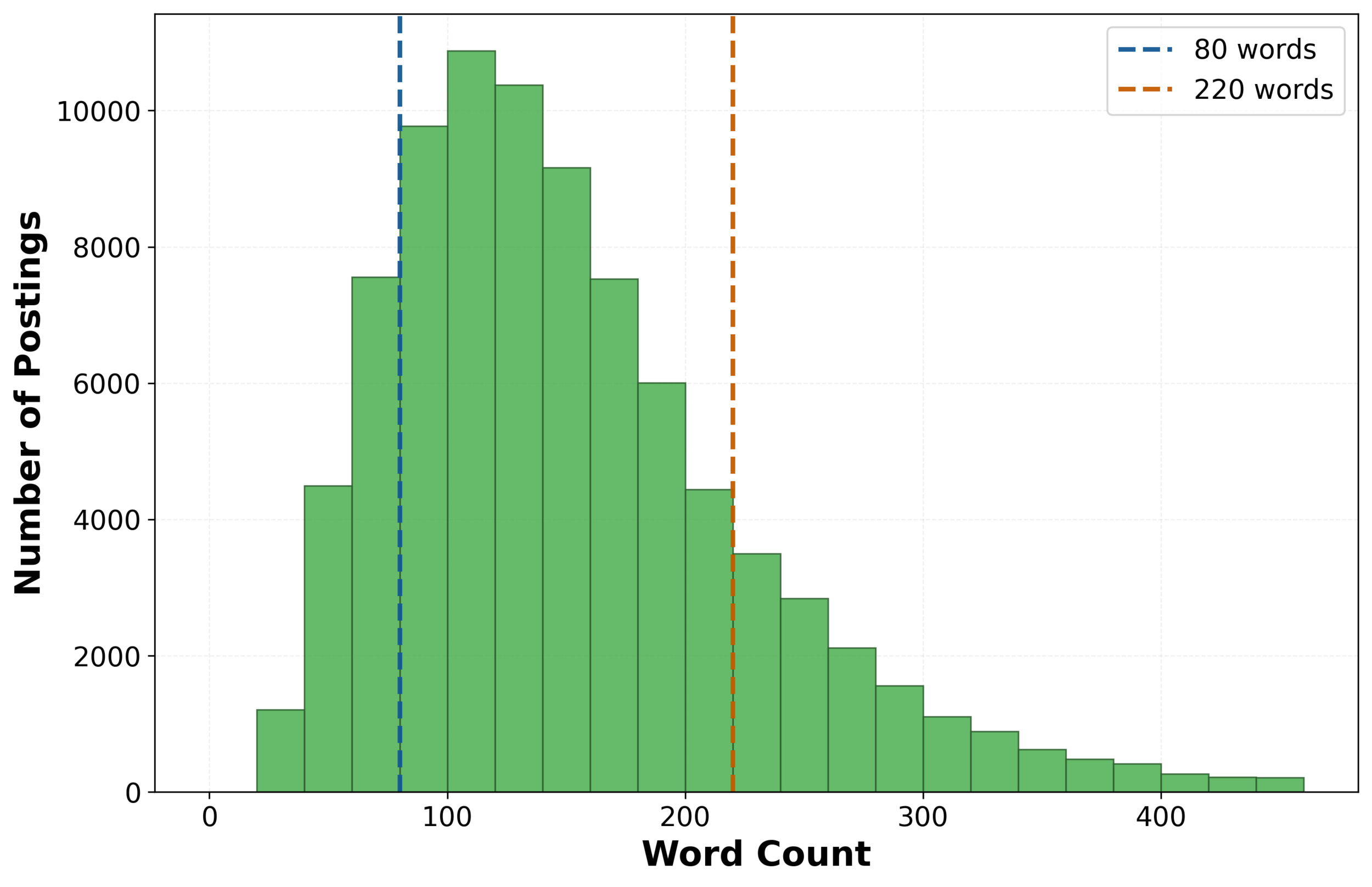
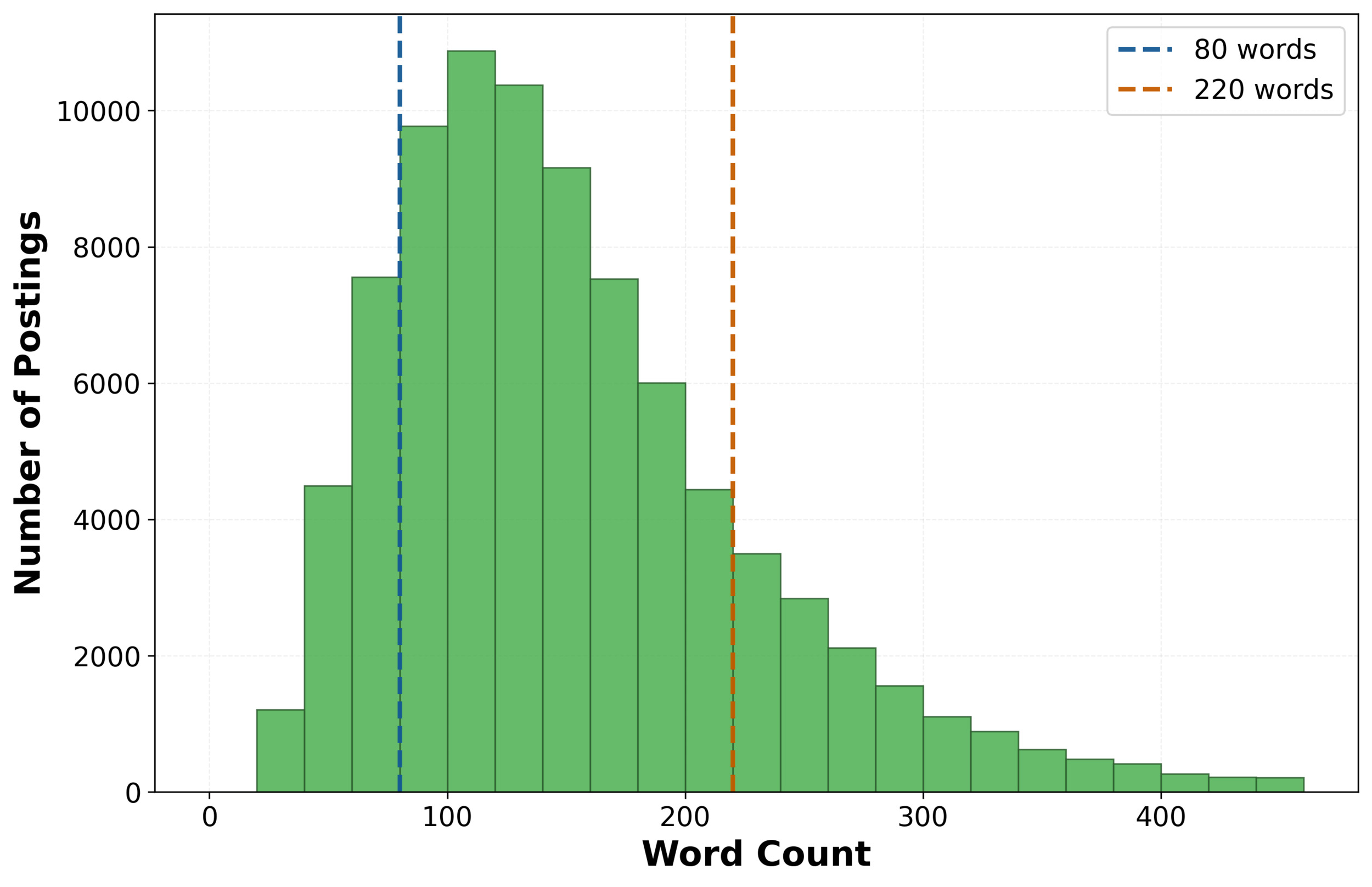
The primary dataset consists of computing and CE job postings from the Hacker News “Who Is Hiring” threads, operated by YC, spanning 2012–2025 (Y Combinator, 2024).[1] YC postings are free-form, employer-generated descriptions that range from brief announcements to short role summaries, averaging approximately 150 words per posting. Because the postings are concise, employers typically prioritize a limited number of explicitly stated expectations. As shown in Figure 1, about 70% of postings fall between approximately 80 and 220 words, with a right-skewed distribution. Normalization analyses controlling for posting length yielded consistent domain-level patterns, indicating that the findings are not driven by length differences.
The YC dataset was selected because it provides a longitudinal record of hiring language across computing and CE roles in a consistent format. Its concise structure enables analysis of which soft skill signals employers prioritize. YC postings are primarily startup-oriented, with a strong U.S. focus and a mix of early- to mid-level roles. These characteristics should be considered when interpreting the results.
A secondary LinkedIn dataset was used as a cross-platform comparison source for the dictionary-based extraction approach. It includes unstructured job descriptions and employer-provided structured skill tags, allowing comparison between soft skill signals extracted from hiring language and those listed in structured fields.[2] Compared with YC, LinkedIn represents a broader set of geographies, sectors, and seniority levels. This scope makes it useful for assessing whether the dictionary-based extraction approach identifies soft skill signals that align with employer-provided skill tags, while the YC dataset remains the primary corpus for analyses across technical specializations, job levels, and years.
3.2. Preprocessing
For the YC dataset, duplicate entries, non-English postings, and postings with fewer than 30 words were removed to exclude fragmentary or non-descriptive entries while retaining the concise structure typical of YC postings. Non-English postings were identified using a standard Python language-detection library to support reliable keyword matching. Word counts were computed after preprocessing but before dictionary-based extraction, ensuring that length statistics reflect the analyzed corpus. The resulting YC corpus contains 82,624 job postings spanning 2012–2025.
For external validation, LinkedIn postings were cleaned using the same language and deduplication criteria. Job titles were filtered using the O*NET occupational classification system to retain computing roles (National Center for O*NET Development, n.d.). After cleaning, 134,026 postings met the computing and CE occupational filter and formed the validation subset.
3.3. Soft Skill Domain Scheme
Soft skill identification was based on a dictionary of 1,184 terms developed by synthesizing peer-reviewed literature on professional competencies and large-scale workforce skill taxonomies. Sources included structured skill lists from LinkedIn, Handshake, and Indeed, as well as competency frameworks reported in prior research on employability and professional skills in computing and engineering (Handshake, 2024; Indeed, n.d.; LinkedIn, n.d.; Motlagh et al., 2025). Terms were retained when they appeared across multiple independent sources and reflected commonly articulated soft skills in technical hiring contexts.
For analysis, terms were organized into three domains: Interpersonal & leadership, Personal effectiveness & growth, and Conceptual/thinking. This structure aligns broadly with established competency frameworks (National Research Council, 2012), while using terminology adapted to hiring language. Because the unit of analysis is hiring language, the dictionary draws on workforce-oriented taxonomies that reflect how employers describe qualifications and role expectations. This structure supports consistent identification of soft skill signals across technical specializations, job levels, and years. Educational frameworks, including engineering accreditation and computing curriculum frameworks, are used to interpret how these patterns may inform curriculum alignment and assessment.
The three domains are further decomposed into ten subdomains used in 4.2.1. The interpersonal & leadership domain includes communication, collaboration, and teamwork, customer orientation, and emotional intelligence; the personal effectiveness & growth domain includes adaptability and continuous learning, time management and organization, and work ethic and professionalism; and the conceptual/thinking domain includes problem solving, decision making and judgment, and creativity and innovation.
The ten-subdomain decomposition was author-constructed from recurring patterns across the compiled skill sources. During dictionary development, ambiguous terms were defined as those that could indicate more than one soft skill domain or could refer to either a technical requirement or a soft skill, depending on context. Overlapping terms were assigned to a primary domain based on their dominant meaning in hiring language, the domain definitions, and posting examples. Multiword phrases were prioritized over isolated single-word matches when possible, and terms that remained unclear were excluded or assigned conservatively to avoid double-counting.
Because the domains contain different numbers of dictionary terms, additional normalization analyses were adjusted for domain dictionary size. The resulting patterns remained consistent, indicating that the findings are robust to differences in domain size.
To assess coding reliability, an independent reviewer examined a random sample of 50 sentences containing detected “communication” terms and independently classified each instance. The reviewer agreed with the study’s coding in 44 of the 50 cases, corresponding to 88% agreement. Because most instances were classified as soft skill references, the coding categories were highly imbalanced. We therefore report percent agreement rather than Cohen’s kappa, which can produce misleadingly low values when one category is much more common than the other, even when coders agree in most cases (Feinstein & Cicchetti, 1990; Gwet, 2014). This level of agreement supports the consistent identification of communication-related soft skill signals across technical specializations, job levels, and years.
3.4. Analytical Dimensions
Technical specializations were assigned through keyword-based classification of job titles and descriptions and grouped into six categories: Software Development and Engineering, Data Analytics and Data Science, AI and Machine Learning (AI/ML), Cybersecurity and Privacy, Systems/Hardware and Embedded, and General Computing roles. The AI/ML specialization was identified using explicit AI-related terms, including artificial intelligence, machine learning, deep learning, neural networks, natural language processing, computer vision, large language models, and common abbreviations (e.g., AI, ML, NLP, LLM). The six categories represent major functional areas of computing and CE work and support comparison of soft skill signals across technical specializations. The General Computing category captures postings that do not map clearly to a more specialized area.
Job level was inferred from job titles and categorized as Entry-level, Mid/senior-level, Manager, or C-suite, supporting comparison of soft skill signals across career stages. Classification rules were refined through manual review of approximately 100 postings across years and technical areas. Hybrid roles were assigned to a primary specialization to preserve consistent grouping, and the rules were applied uniformly across technical specializations, job levels, and years. The analysis compares domain-level soft skill signals across technical specializations and job levels and evaluates their stability over time.
3.5. Data Analysis
Soft skill signals were quantified using two complementary metrics: coverage and intensity. Coverage captures how broadly a soft skill domain appears across postings, whereas intensity captures how frequently terms from that domain are mentioned.
All metrics were calculated within an analytical group defined as a subset of postings used for comparison, such as a technical specialization, job level, or year.
Coverage (domain-level presence). Coverage measures the proportion of postings within a group that mention at least one term from a given domain.
CoverageD,G=∑p∈G1(countp,D>0)|G|×100
where denotes the number of detected mentions from domain in posting equals 1 when at least one term appears, and is the total number of postings in group
Intensity (mentions per posting). Intensity measures the average number of domain-specific mentions per posting within a group, reflecting overall mention frequency across postings. Because it is computed over all postings, it captures corpus-level emphasis across the full set of postings.
IntensityD,G=∑p∈Gcountp,D|G|
where denotes the number of detected mentions from domain in posting and is the total number of postings in group Intensity is computed across all postings and is not conditional on coverage.
Coverage and intensity were calculated across the full YC corpus for RQ1, compared across technical specializations and job levels for RQ2, and examined by year within each specialization and job level for RQ3. For RQ2, supplementary Pearson chi-square tests assessed associations between binary domain presence and technical specialization or job level. Holm-adjusted p-values were used to account for multiple comparisons, and Cramér’s V was reported as a measure of association magnitude. Intensity was analyzed descriptively.
4. Results
This section presents the findings for the three research questions. The YC corpus provides the primary results, while LinkedIn data provide a cross-platform consistency check for the text-based extraction approach.
4.1. Coverage, Intensity, and Validation of Soft Skill Signals in YC
To address RQ1, we examine the coverage and intensity of soft skill signals in YC postings. Because these postings are concise, the inclusion of a soft skill reflects what employers choose to state explicitly in limited space, while absence may reflect implicit expectations or external descriptions.
Across the YC corpus, interpersonal & leadership skills show the highest coverage and intensity among the three domains, followed by personal effectiveness & growth. Conceptual/thinking skills appear less frequently but remain visible across the corpus. This ordering indicates that short-form YC postings most often explicitly signal communication, collaboration, leadership, ownership, adaptability, and self-management, while reasoning, judgment, and problem-framing language appears at lower absolute levels. These patterns answer RQ1 by showing which soft skill domains are most broadly and frequently signaled in short-form computing and CE hiring language.
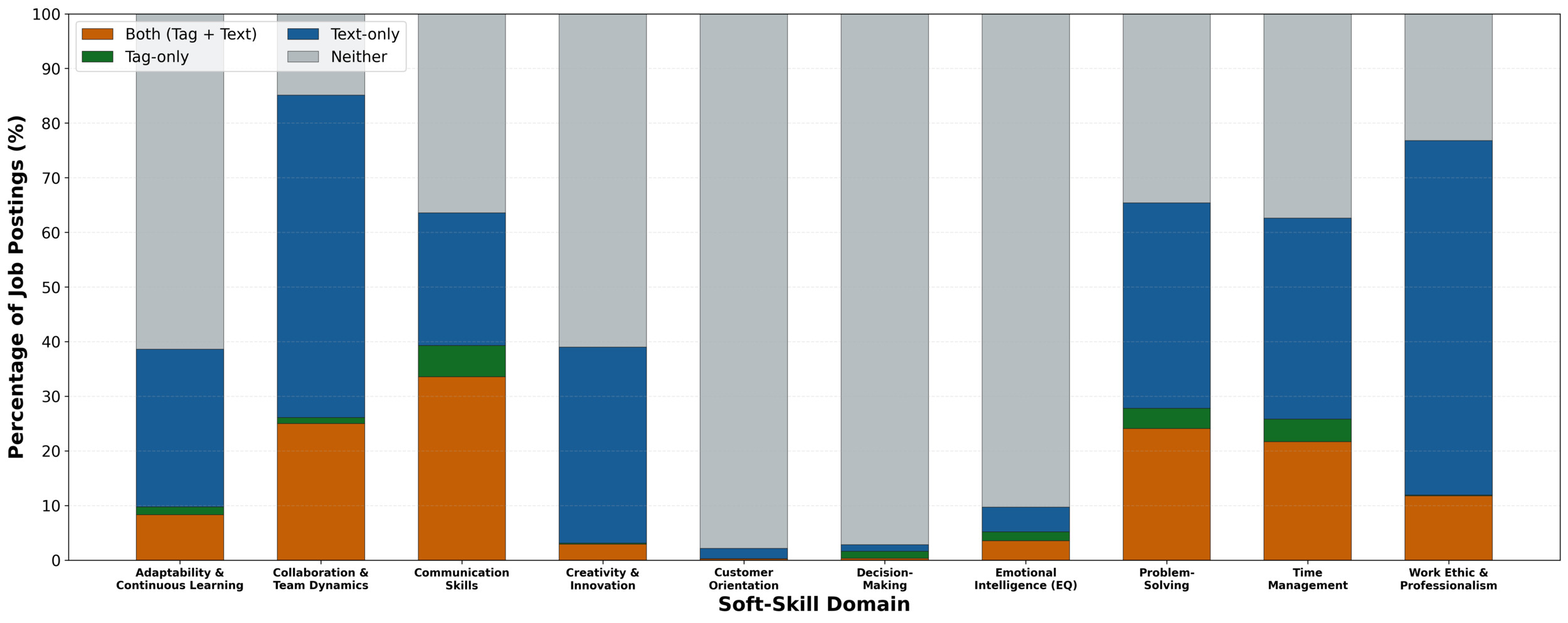
To assess alignment between text-based extraction and employer-provided skill signals, we conducted a cross-platform comparison using LinkedIn job postings, which include both job-description text and structured skill tags. For each posting, dictionary-based soft skill matches and employer-provided structured skill tags were mapped to the same subdomain scheme. A subdomain was coded as present when at least one relevant term or tag appeared. Text-derived and tag-derived presence were then summarized as matched, text-only, or tag-only cases.
Figure 2 shows that alignment between text-derived and tagged soft skill signals varies substantially across subdomains. Average agreement is 69%, but the subdomain-level variation is also informative. Agreement is highest for customer service and client management (98.09%), indicating close alignment between job-description text and structured skill tags. Collaboration and team dynamics show a different pattern, with 40% agreement, suggesting that collaboration-related skills are often conveyed through narrative descriptions such as working across teams, partnering with stakeholders, or coordinating with others.
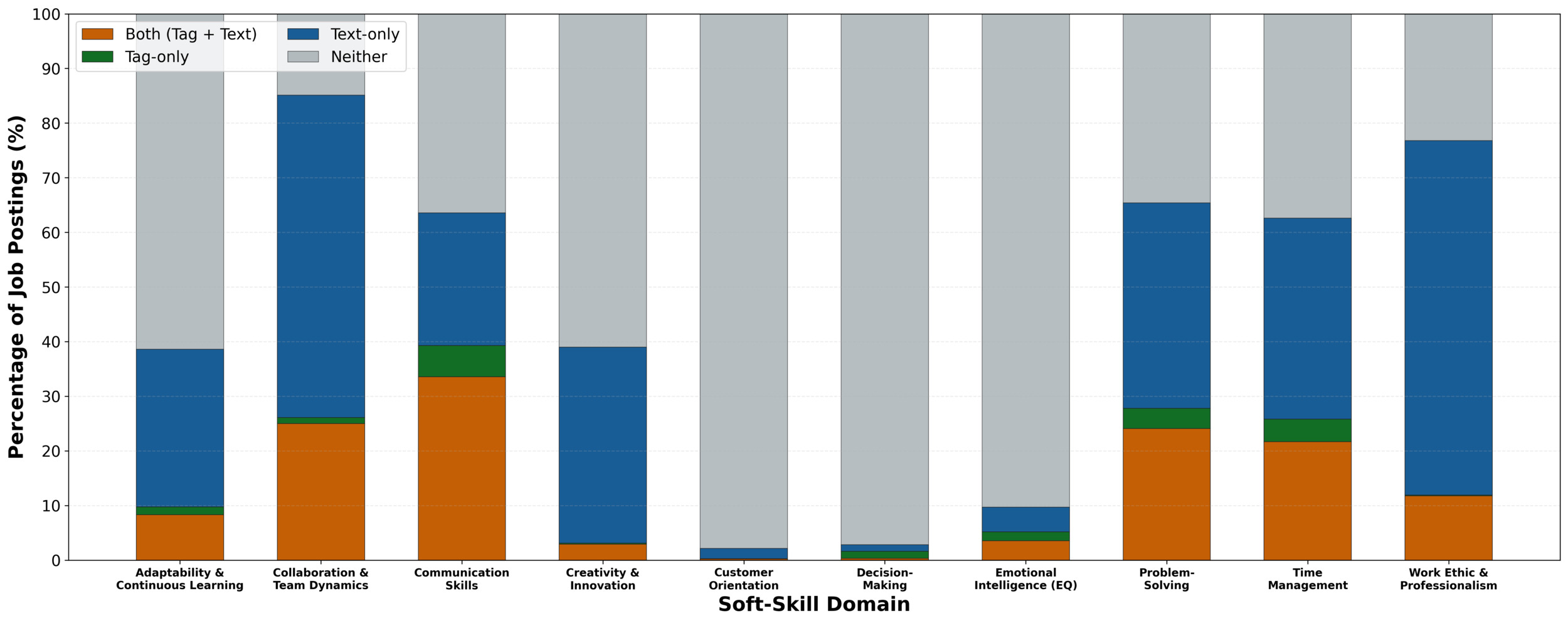
Text-only cases appear frequently across several subdomains, indicating that soft skills are often described in job-description text even when they are not formally tagged. Tag-only cases represent 1.95% of postings, indicating that structured tags rarely capture soft skills absent from the text.
These comparison patterns provide a consistency check for the text-based extraction approach and show that narrative job-description text contains soft skill expressions not represented in structured tags. The approach aligns with structured skill tags across several subdomains while also capturing additional soft skill expressions in narrative job-description text.
4.2. Variation in Soft Skill Coverage and Intensity Across Technical Specializations and Job Levels
To address RQ2, we compare soft skill coverage and intensity across technical specializations and job levels, with particular attention to the AI/ML specialization relative to other technical areas.
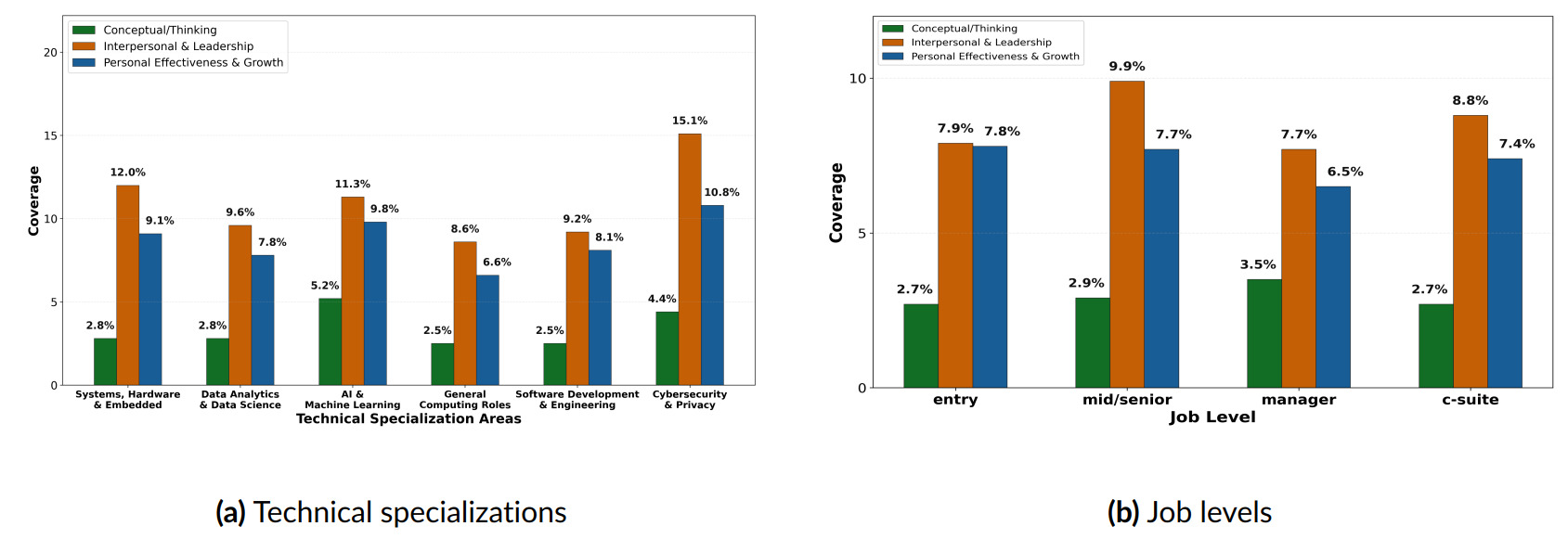
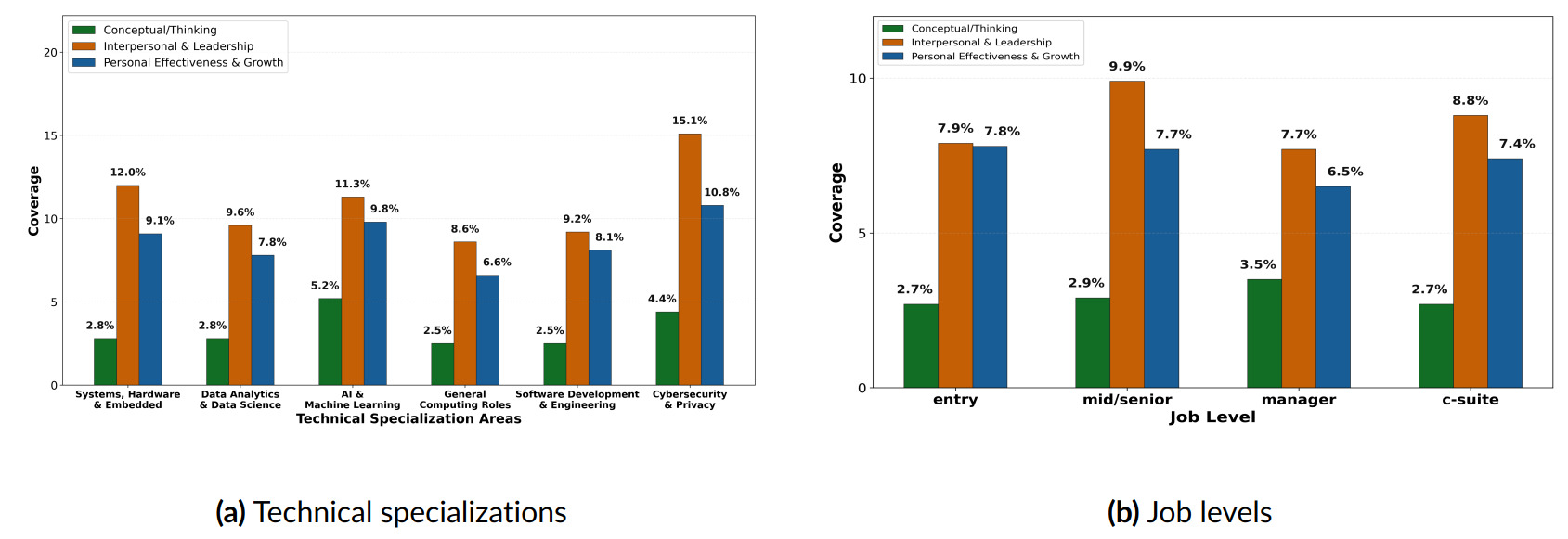
Across the comparisons in Figure 3, interpersonal & leadership skills show the highest coverage, ranging from approximately 7.7% to 15.1% across the displayed technical specializations and job levels. Personal effectiveness & growth follows, with coverage ranging from approximately 6.5% to 10.0%. Conceptual/thinking skills appear less frequently, ranging from approximately 2.5% to 5.2%, but remain present across technical specializations and job levels. The AI/ML specialization shows relatively higher conceptual/thinking coverage than most other technical areas.
Supplementary analyses identified statistically significant differences in coverage across technical specializations for all three domains (all Holm-adjusted although the associations were small (Cramér’s – These findings indicate detectable but limited variation across specializations, alongside the broadly consistent domain patterns shown in Figure 4.
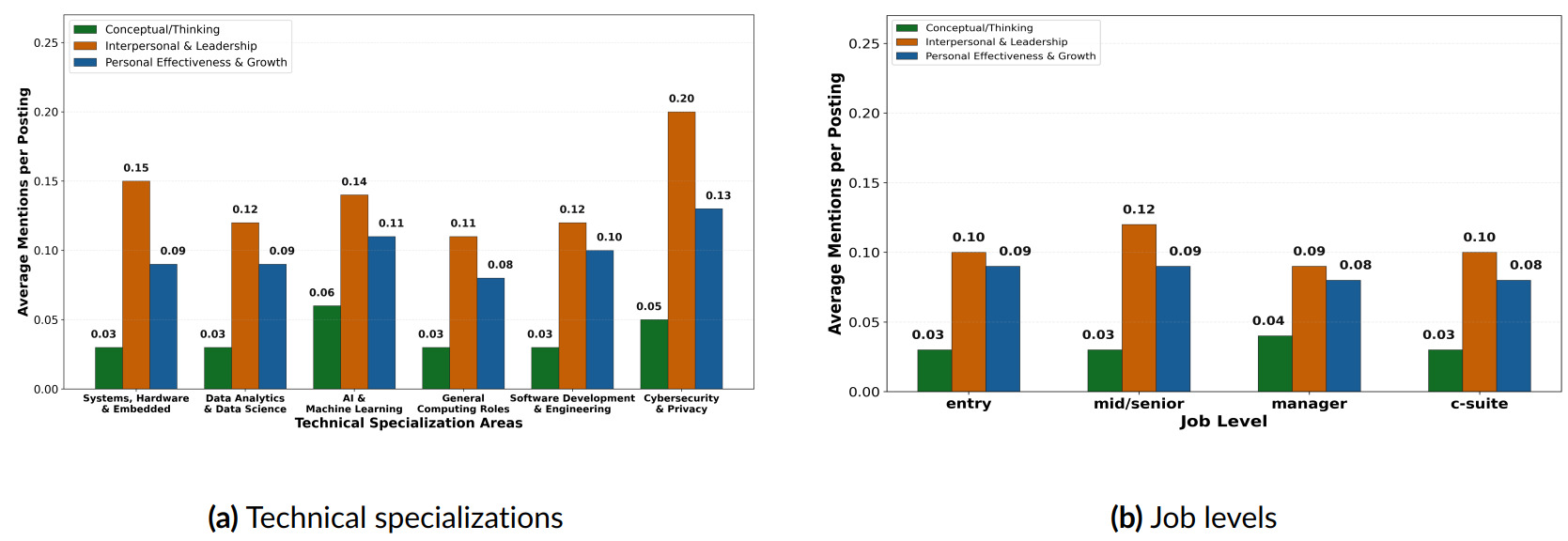
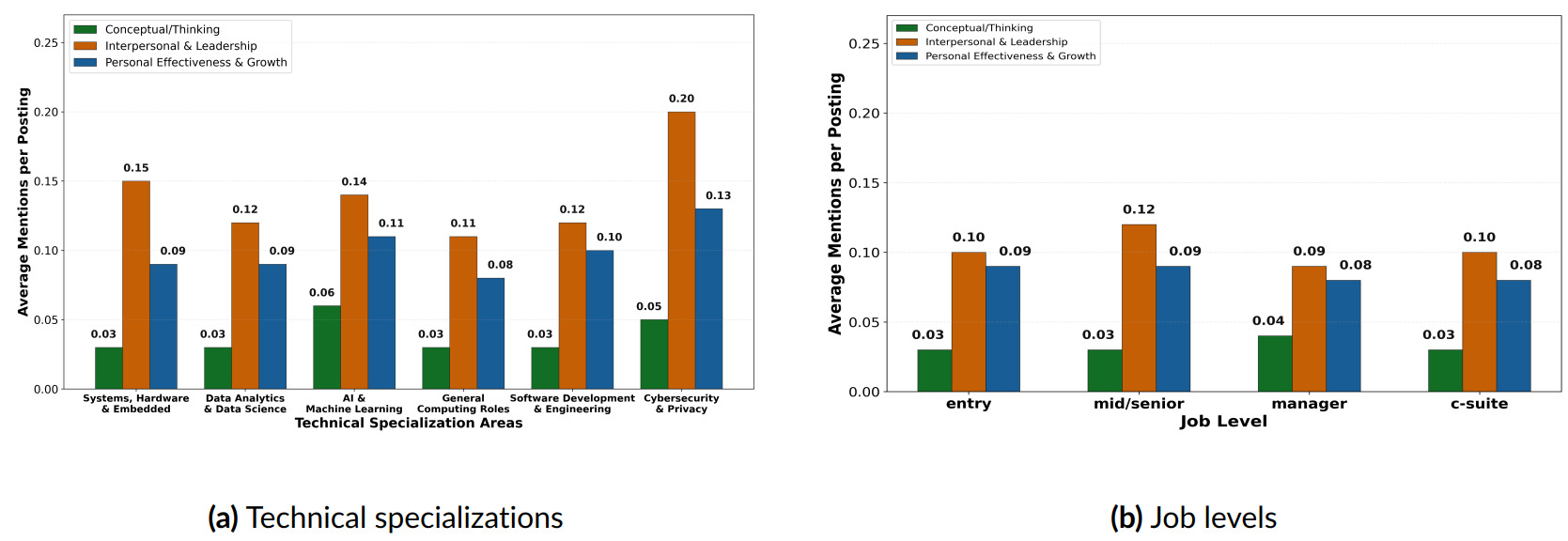
Figure 4 shows similar patterns for intensity. Interpersonal & leadership skills show the highest intensity across technical specializations and job levels, with relatively higher values in the cybersecurity specialization and mid/senior-level postings.
Personal effectiveness & growth shows moderate and relatively consistent intensity across contexts, ranging from approximately 0.08 to 0.13 mentions per posting, with the highest value occurring in the cybersecurity specialization.
Conceptual/thinking skills show lower intensity overall, typically around 0.03–0.06 mentions per posting. The AI/ML specialization shows relatively higher intensity than most other technical areas, indicating that reasoning, judgment, and problem-framing language appears more frequently in AI/ML hiring language than in many other specialization contexts.
To further interpret these domain-level patterns, we examine the ten-subdomain decomposition to identify which specific skill categories contribute to each broader domain.
4.2.1. Decomposing the Three-Domain Structure Using the Ten Subdomains
To clarify domain-level patterns, we examine the ten-subdomain decomposition across technical specializations. This provides a more granular view of which skill categories contribute to the observed coverage and intensity patterns within each broad domain.
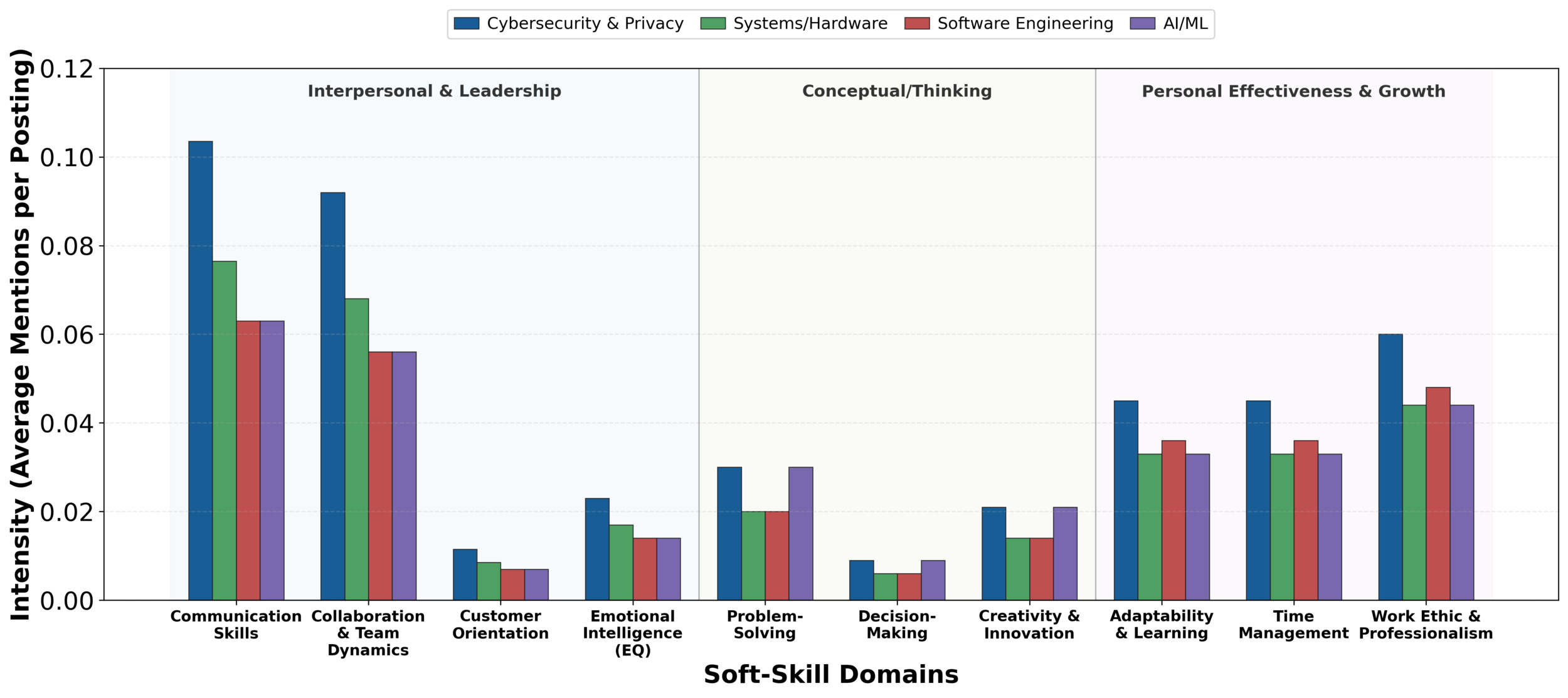
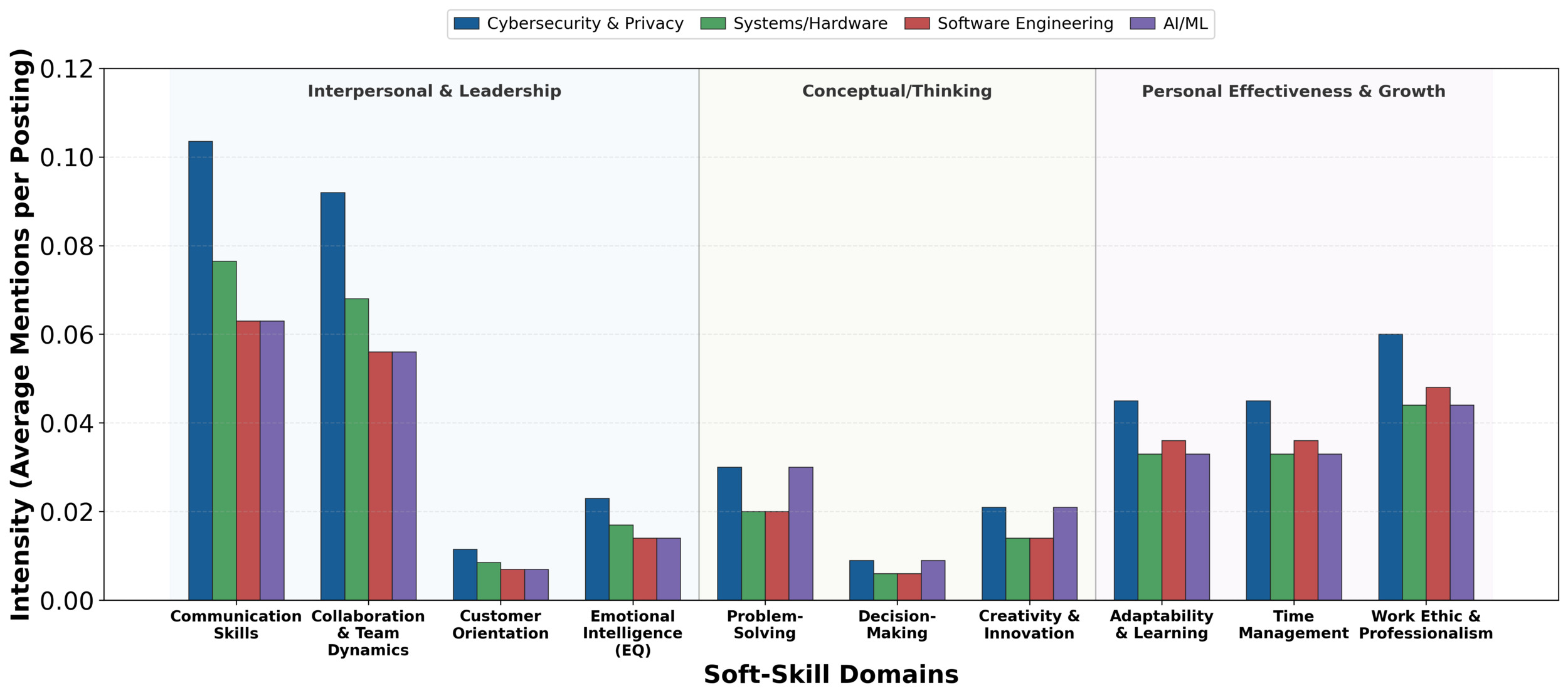
Figure 5 presents intensity across the ten soft skill subdomains and technical specializations. Within the interpersonal & leadership domain, communication and collaboration account for a substantial share of the signal, while emotional intelligence and customer orientation appear less frequently.
Within the personal effectiveness & growth domain, work ethic and professionalism, time management and organization, and adaptability and continuous learning account for most detected references. These subdomains appear across technical specializations and correspond to the relatively stable coverage and moderate intensity observed for the broader domain.
Within the conceptual/thinking domain, problem solving contributes the largest share, with smaller contributions from creativity and innovation and decision making and judgment.
4.3. Longitudinal View of Soft Skill Signals
We next examine whether soft skill signals remain stable over time across technical specializations and job levels. Stability is defined as the persistence of domain rank order and coverage and intensity patterns across years.
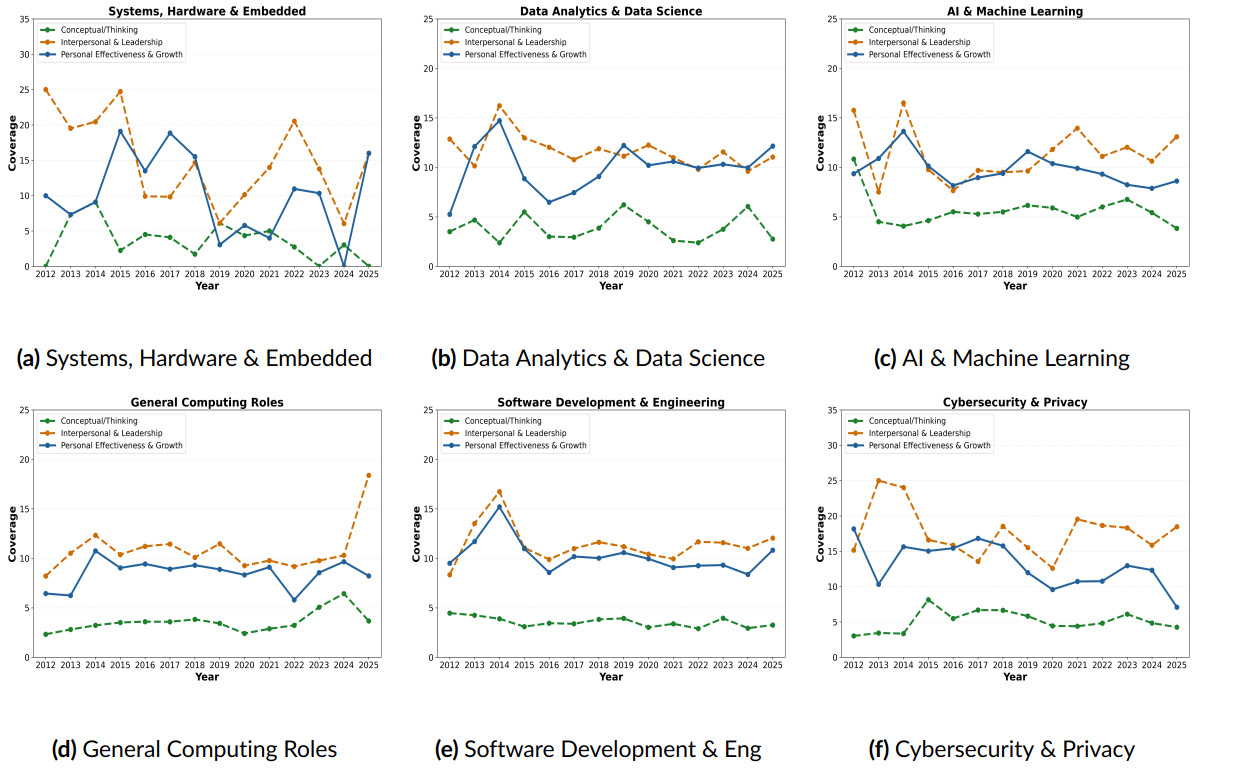
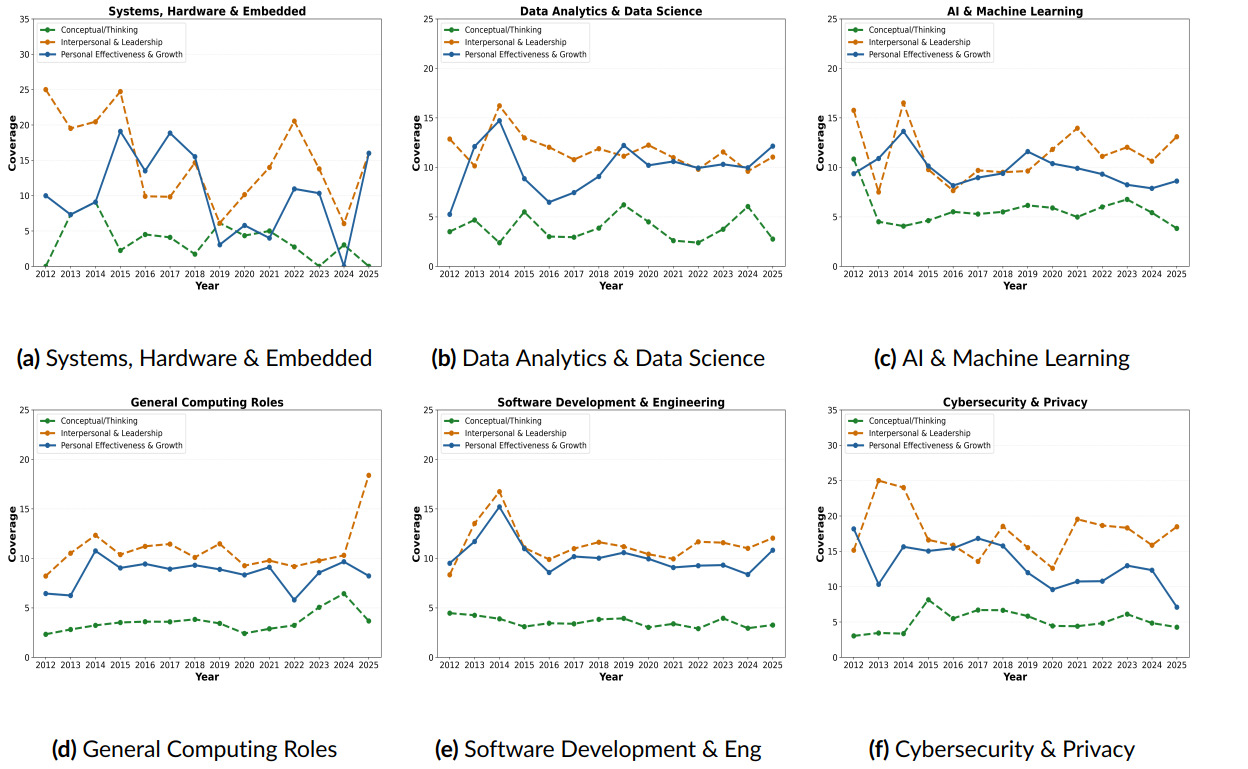
Figure 6 presents coverage trends across technical specializations. Across the six specializations, including AI/ML, interpersonal & leadership skills remain the most visible domain in most years. Personal effectiveness & growth generally follows, while conceptual/thinking skills remain present at lower levels. Although year-to-year variation occurs within individual specializations, the relative ordering of domains remains broadly similar across the observation period.
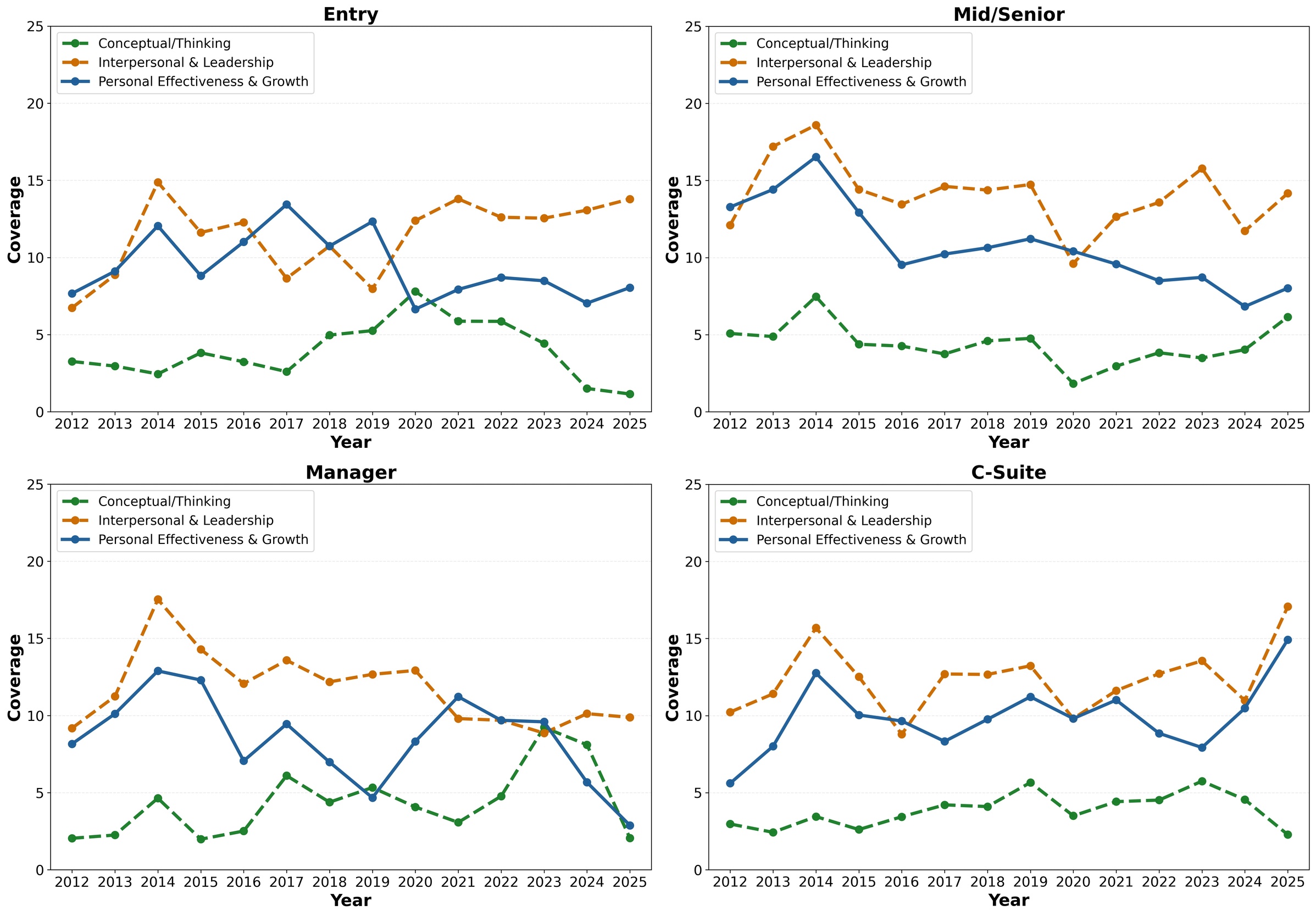
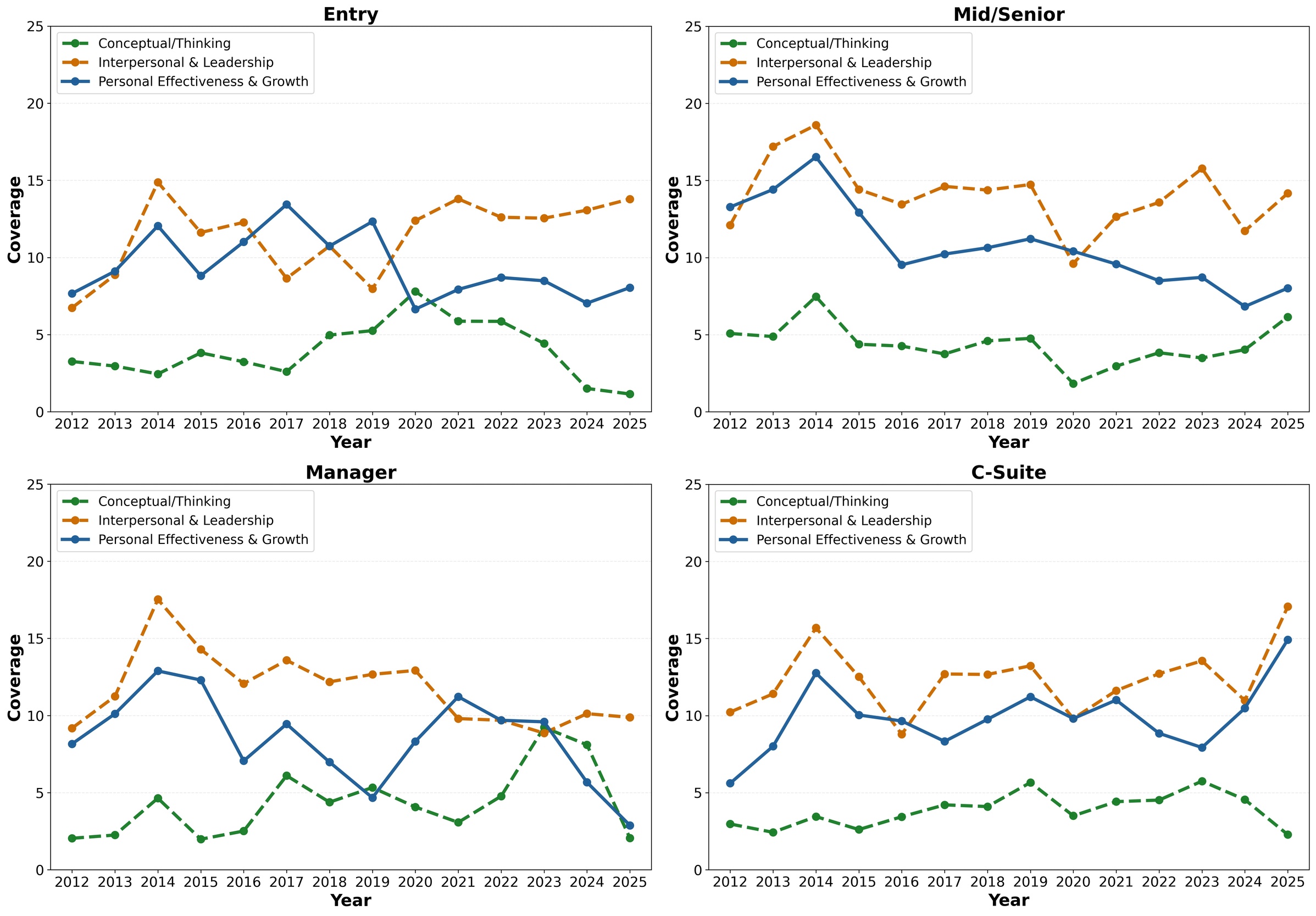
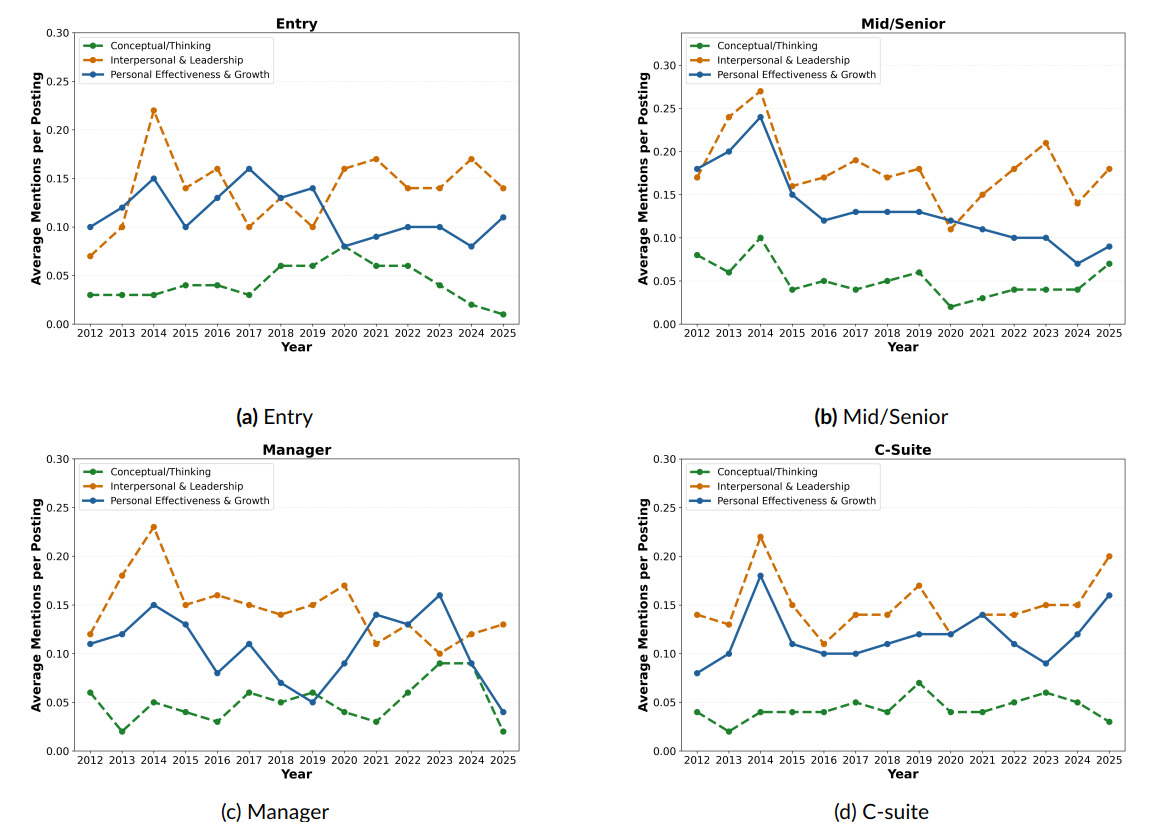
Figure 7 presents coverage trends across job levels. Across entry, mid/senior, manager, and C-suite postings, interpersonal & leadership skills remain the most visible domain in most years. Personal effectiveness & growth appears regularly across levels, while conceptual/thinking skills remain less frequent but visible. Coverage varies across years and levels, particularly in smaller groups such as C-suite postings, but the relative ordering of domains remains broadly consistent.
We next examine intensity trends across the same technical specializations and job levels.
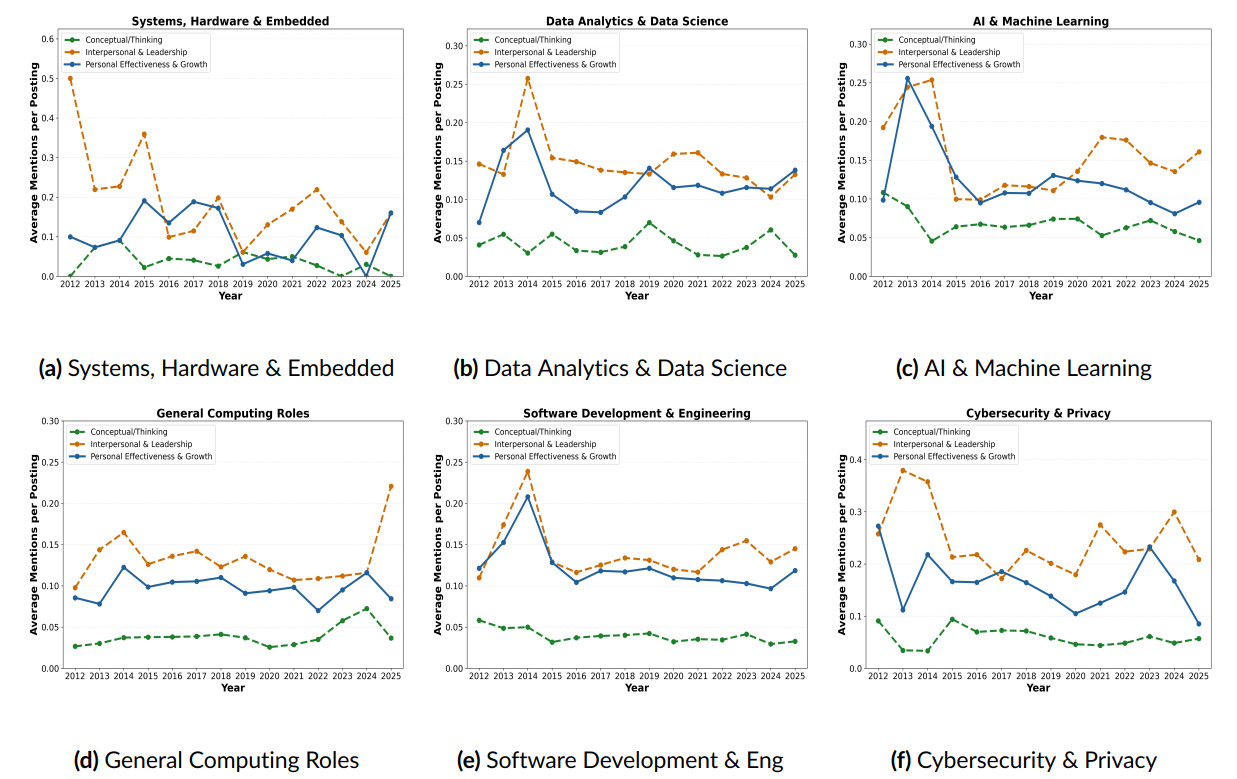
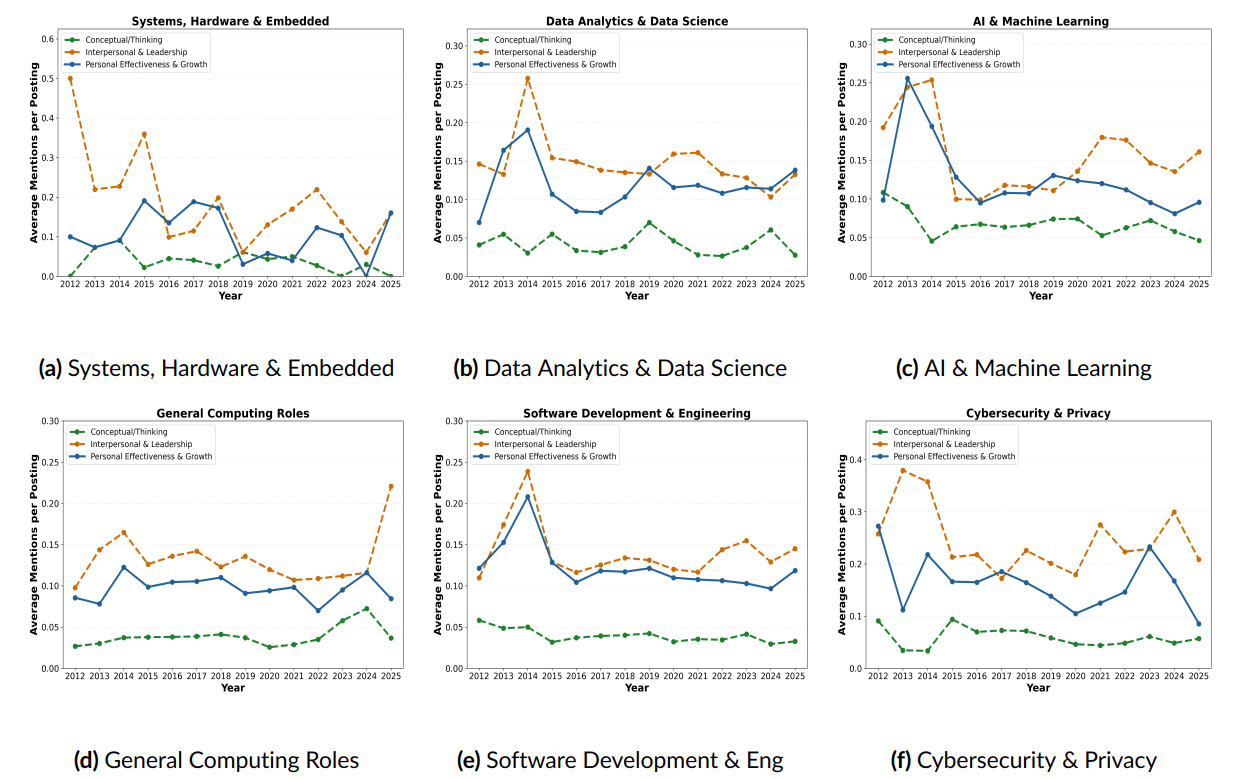
Figure 8 presents intensity trends across technical specializations. Interpersonal & leadership skills show the highest intensity in most years, followed by personal effectiveness & growth, while conceptual/thinking skills remain lower but visible. Although the magnitude varies across specializations and years, the relative ordering of domains remains broadly similar.
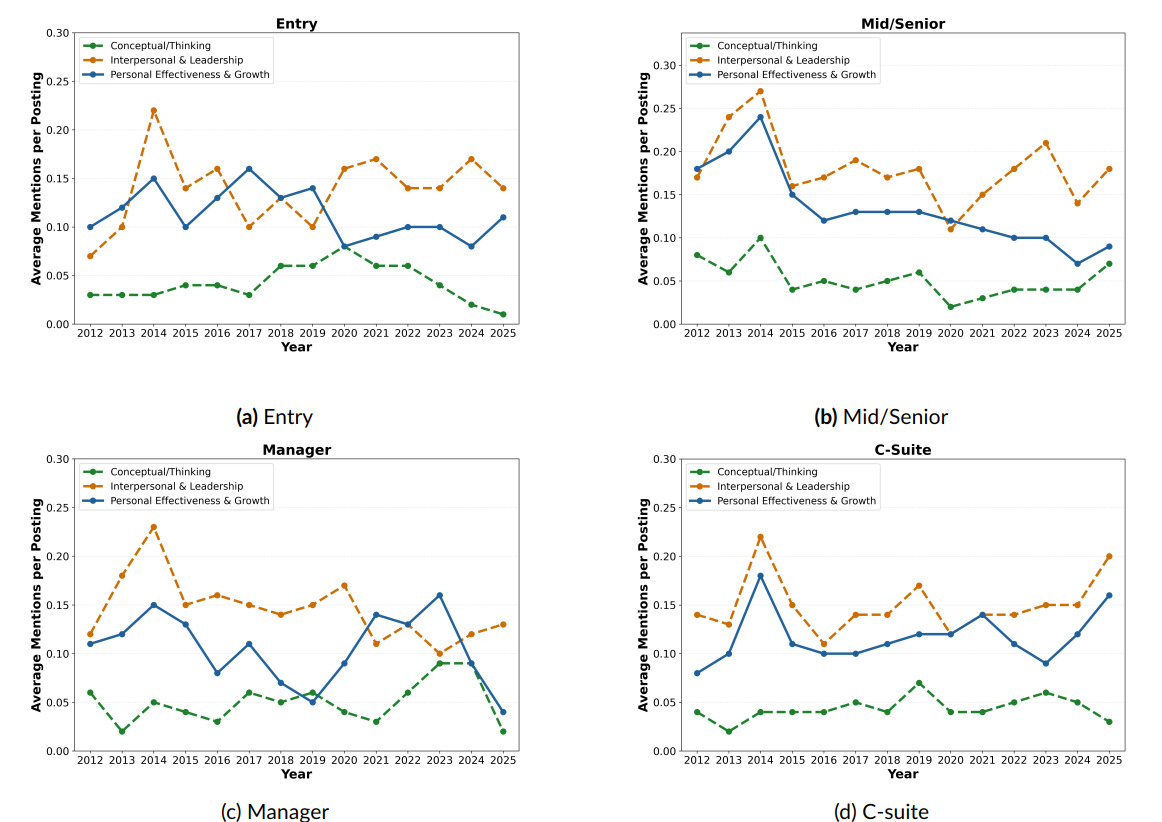
Figure 9 presents intensity trends across job levels. Interpersonal & leadership skills show the highest intensity in most years across entry, mid/senior, manager, and C-suite postings. Personal effectiveness & growth shows moderate and relatively stable intensity, while conceptual/thinking skills remain lower but consistently present.
Intensity increases in later years for manager and C-suite postings, particularly for interpersonal & leadership skills, while the relative ordering of domains remains similar across job levels.
These longitudinal patterns answer RQ3 by showing that, despite year-to-year variation, the relative ordering of the three domains remains broadly stable across technical specializations and job levels. Examining potential event-driven changes, such as those associated with the COVID-19 period, is left for future work.
5. Implications for Computing and CE Educators
The implications presented in this section interpret soft skill signals in hiring language as resources for educational reflection. The analysis identifies soft skill domains that remain visible across computing and CE contexts and provides a structured reference for examining how these skills may be expressed and assessed in technical coursework.
Engineering education research on professional-skill pedagogy emphasizes embedding communication, teamwork, self-management, and problem-solving outcomes within authentic technical tasks as part of engineering work (Lattuca et al., 2006; Passow, 2012; Shuman et al., 2005; Trevelyan, 2014). Common pedagogical approaches include capstone and design projects, team-based assignments, peer evaluation, technical communication artifacts, reflective documentation, and rubric-based assessment. The findings of this study complement this literature by identifying soft skill signals in hiring language that may be connected to observable forms of student work in computing and CE courses.
Interpersonal & leadership skills appear most consistently across technical specializations and job levels, followed by personal effectiveness & growth. Conceptual/thinking skills appear less frequently but remain visible, with relatively higher levels in the AI/ML specialization and some other technical specializations. These findings summarize soft skill signals that recur in concise hiring language.
To translate these domain-level patterns into observable forms of performance, we reviewed a random sample of approximately 100 YC postings containing each domain and examined the surrounding phrasing of soft skill references. Recurring action-oriented expressions were identified to show how soft skills are articulated as expected behaviors in hiring language. Table 1 is intended as an illustrative bridge between observed hiring-language patterns and possible educational interpretations. The examples identify potential ways educators may connect hiring-language patterns to observable student work, depending on local program goals, course design, and assessment priorities.
Table 1 offers illustrative examples of student artifacts that may be relevant when educators examine connections between soft skill signals and existing learning outcomes. The examples are intended to support reflection within local program goals, course designs, and assessment priorities. In a capstone context, for example, communication and teamwork signals could be considered alongside existing project rubrics, while reasoning-related signals could be considered when reviewing design justifications and trade-off analyses in technical coursework.
6. Limitations
This study has both methodological and contextual limitations.
Methodological limitations. Soft skill identification relies on dictionary-based analysis of job-posting text and may not capture all implicit or context-specific expressions. Although the dictionary was developed and refined using multiple workforce sources, some variation in terminology and contextual usage may remain.
Classification of technical specializations, including the AI/ML specialization, and job levels is based on keyword and title heuristics. While applied consistently across the dataset, some ambiguity may persist for hybrid or emerging roles.
Contextual limitations. The YC dataset consists of short-form employer job postings. This format enables examination of how employers prioritize skills within concise hiring language, but does not capture the full descriptive range found in longer corporate job descriptions. This may bias interpretation toward startup-oriented and concise hiring contexts. Findings should therefore be interpreted as reflecting patterns within concise hiring language and the ways employers communicate soft skill expectations in this format.
Additionally, job postings reflect employer descriptions of desired traits rather than actual on-the-job performance, which may limit direct curriculum alignment.
7. Conclusion
Across more than a decade of short-form computing and CE job postings, soft skill signals show a broadly consistent domain-level structure. Interpersonal & leadership skills are the most frequently signaled among the three domains, followed by personal effectiveness & growth, while conceptual/thinking skills appear less frequently but remain visible across technical specializations, job levels, and years. Although the magnitude of coverage and intensity varies across contexts, the relative ordering of the three domains remains broadly stable.
Differences across technical specializations and job levels are detectable but limited. Interpersonal & leadership skills remain the most frequently signaled domain across contexts, while conceptual/thinking skills show relatively higher presence in the AI/ML specialization than in most other technical areas. The persistence of this ordering over time indicates a stable pattern in how soft skills are explicitly communicated in computing and CE hiring language.
The cross-platform comparison with LinkedIn postings provides a consistency check for the dictionary-based extraction approach. Narrative job descriptions contain soft skill signals that are not always represented in employer-provided structured skill tags, indicating that structured text analysis can capture additional expressions of professional competencies in hiring language.
For computing and CE educators, these findings provide a structured, workforce-informed reference for examining how soft skills are communicated in hiring language. The recurring domains may be examined through observable student work, including design documentation, peer review, project coordination artifacts, and decision rationales within technical coursework. Treating these workforce signals as design hypotheses can support reflection on curriculum alignment while maintaining an evidence-based approach to course and assessment design.
Future work may examine how these domains appear in student artifacts and how they relate to learning outcomes across institutions. It may also investigate changes in soft skill signals within the AI/ML specialization over time, including possible inflection points or event-driven changes.
Author Statement
ChatGPT was used to support language refinement and clarity during manuscript preparation. All AI-assisted text was reviewed and edited by the authors, and the final manuscript reflects the authors’ own analysis and interpretations.
Example thread available at https://news.ycombinator.com/item?id=46108941.
Dataset available at https://www.kaggle.com/datasets/asaniczka/1-3m-linkedin-jobs-and-skills-2024.