Postsecondary institutions rely heavily on Learning Management Systems (LMS) such as Canvas and Blackboard to support student success across face-to-face, hybrid, and online delivery. A central tool within LMSs is the discussion board, used in higher education since the early 1990s (Dudley-Marling, 2013). In asynchronous learning, discussion boards are often the primary means to promote social interaction and learning through social constructivism (Gulbrandsen et al., 2015; Hammond, 2019). Yet their effectiveness varies widely by instructor (Aloni & Harrington, 2018; Xie & Correia, 2024). Given their ubiquity and the growth of online learning, maximizing their impact is imperative.
As Artificial Intelligence (AI) advances, research is exploring its potential to enhance higher education broadly and discussion boards specifically (Archibald et al., 2023; Butcher et al., 2020; Fuller & Barnes, 2024; Johnson & Davis, 2024; Rutner & Scott, 2022). While integrating AI into instruction is new, technology design and implementation frameworks are not. What is often missing in education, however, is a human-centered approach (Topali et al., 2024). The Instructor and Student Insights for Gains in Higher Order Thinking Skills (INSIGHTS), a National Science Foundation–funded project, applies such an approach to developing AI-powered learning analytics dashboards (LADs) that improve discussion board efficacy while minimizing instructor time. This study presents student perceptions of discussion board usefulness and influences on their attitudes, and discusses implications for designing AI supported LADS.
Student-centric Digital Design
The technology sector has long accepted the need for user-centric design; however, the educational technology sector has not traditionally involved end users, students and educators, in the design process (Hasani et al., 2020; Topali et al., 2024). In fact, a recent study found that only 11% of American education technology companies requested feedback from end-users prior to launching their technologies (Burns, 2023). Excluding end users, particularly in the development of AI-supported educational tools, often results in reduced trust, a misalignment with user needs, and ultimately lower levels of use and engagement (Topali et al., 2024). Conversely, when educational technology developers adopt a user-centric design approach, it results in higher usability and engagement (Cen et al., 2023; Lu et al., 2022). Trust and satisfaction have been shown to be critical components of AI-driven educational platforms and highlight the value of incorporating student perspectives in the early stages of platform development (Saqr et al., 2024; Tran et al., 2023). Collectively, these findings indicate that educational technology may benefit from adopting practices more commonly found in the broader technology sector, particularly those that prioritize end-user involvement and iterative design. Doing so could help bridge the gap between intended design outcomes, trust with AI enhanced tools, and their use by educators and students.
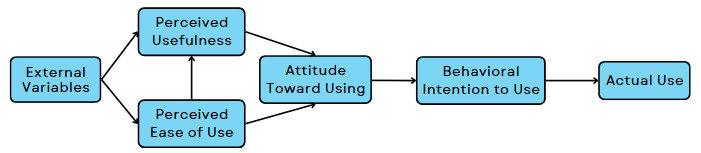
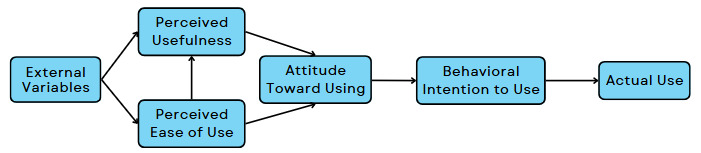
One such practice that is used to support the development of technology is the Technology Acceptance Model (TAM). The TAM was founded on the Theory of Reasoned Action as displayed in Figure 1 (Davis, 1989). The model asserts that an individual’s likelihood to adopt and use a certain technology depends on their perceptions of the technology’s ease of use, and usefulness which are both influenced by external variables. These perceptions in turn inform their attitudes toward the technology and ultimately whether they use the technology (Davis, 1989).
In understanding how technology is successfully leveraged and adopted within the classroom, TAM has gained substantial traction (Ali et al., 2018; Fathema et al., 2015; Scherer et al., 2019). In the educational technology space, TAM is used to predict the likelihood of end users such as instructors and students to adopt the technology. Some general education examples include investigating student attitudes toward virtual classrooms, digital academic reading tools, classroom response system, classroom chat, e-lectures, and mobile virtual reality (Kemp et al., 2024; Lin & Yu, 2023; Sprenger & Schwaninger, 2021). Specifically, within engineering education, TAM has been used to study the following: undergraduate engineering and construction students’ acceptance of BIM (Building Information Modelling) technologies in classroom and lab settings; how engineering students accept augmented reality tools for learning automation system concepts; and integrating Task-Technology Fit (TTF) to examine why students continue using simulation software in mechatronics courses (Ahankoob et al., 2025; Li & Liang, 2025; Shyr et al., 2024).
Student Perceptions of Discussion Boards
One of the most ubiquitous educational technology tools is the discussion board. Within engineering education, intentional design of discussion boards have been found to provide valuable learning experiences for students including: facilitating collaborative knowledge building; increased course performance; deeper processing of knowledge; and increased perceived learning (Kittur et al., 2024; Libre, 2021; Mohammad Zadeh et al., 2024; Rothstein et al., 2023; Zhang et al., 2023) This potential to impact student learning and engagement has led to discussion boards being a rapidly emerging focus for AI enhancement. These enhancements include using AI for grading, generating better prompts, and improving student-student interactions (Butcher et al., 2020; Hamadi et al., 2023; Rutner & Scott, 2022). While the potential positive impact of these enhancements are exciting, their impact will likely be influenced by student perceptions of discussion boards in general and very few studies have been conducted that examine student perceptions of discussion boards and their usefulness in general.
The few studies that have been conducted to investigate student perceptions of discussion board effectiveness have found mixed results. When discussion boards are used effectively, they offer many benefits including fostering a sense of community, creating a comfortable learning environment, and supporting learning (Martirosyan et al., 2022; Schultz & Sandidge, 2022). Students find themselves engaging in discussion boards more frequently when they feel comfortable (Martirosyan et al., 2022). This increased engagement can increase critical thinking about a topic, leading to a deeper understanding of the content, which results in higher exam scores (Ackerman & Gross, 2021). Discussion boards also serve as a log of the discussions so students can revisit them as needed to support their learning of the material (Ackerman & Gross, 2021). A valuable factor that students see as contributing to the effectiveness of discussion boards is instructor engagement. When instructors actively engage in a meaningful way within discussion threads, students are more likely to stay engaged (Rothstein et al., 2023; Schultz & Sandidge, 2022). Even though some students find discussion boards valuable, many others do not. It appears that instructor engagement within discussion board threads positively influences student perceptions of the value of engagement and learning in discussion boards (Schultz & Sandidge, 2022).
Just as there are student perceived benefits of discussion boards, there are challenges. As mentioned, discussion boards are intended to enhance the social aspect of asynchronous learning and while some students do perceive this to happen, many students do not feel that discussion boards help them connect with their classmates (Schultz & Sandidge, 2022). Not only are discussion boards intended to support a sense of community they are also supposed to enhance content learning. Some students perceive discussion boards to support learning and others do not (Ackerman & Gross, 2021; Schultz & Sandidge, 2022). More specific challenges students perceive when working with discussion boards include feeling overwhelmed and anxious when trying to navigate the threads of a discussion (Ackerman & Gross, 2021; Bardolph et al., 2019). Notifications of new threads and responses can also generate anxiety for students as they feel the immediate need to check the discussion boards (Bardolph et al., 2019).
Despite broad scholarly attention to educational technologies and the application of the Technology Acceptance Model across various instructional tools, limited research has focused specifically on how undergraduate students perceive discussion boards, particularly as inputs for AI tool development. Much of the existing literature either examines discussion boards from a pedagogical lens or investigates TAM in relation to more novel platforms. Few studies bridge these domains by applying TAM to qualitative student data to inform the design of AI-enhanced learning supports. This study addresses that gap by centering student voices within a well-established theoretical framework to understand how perceptions of usefulness, ease of use, and external factors shape engagement with discussion boards. In doing so, it contributes original insights to both the technology acceptance literature and the design of human-centered AI tools that are responsive to the end-user experience.
INSIGHTS Background
The notion that student engagement and learning is positively impacted using discussion boards to support learning through thoughtful prompts that promote higher order thinking skill is at the foundation of the project this study is based on. The Instructor and Student Insights for Gains in Higher-order Thinking Skills (INSIGHTS) project will develop and pilot complementary student and instructor facing learning analytics dashboards (LADs) intended to leverage discussion boards to enhance online presences that promote higher order thinking skills (HOTS) such as critical thinking. To achieve this goal, a user-centric design model which has three phases has been adopted: 1) user-specific research, 2) prototyping, and 3) piloting, testing, and evaluation. At the time of writing this manuscript, the project is currently in phase 1, user-specific research which consists of gathering information from potential users to better understand their needs and constraints to help inform the design of the LAD to support user acceptance and usability.
Given that INSIGHTS is focused on the development of discussion board LADs, an understanding of how students perceive discussion boards themselves is needed to ensure the LADs are enhancing the effectiveness of discussion boards which is presented herein. The entire premise of the INSIGHTS projects is that discussion boards can be used effectively to support higher order thinking skills, not simply test scores, and that students find these types of discussion more engaging. This needs to be verified prior to designing the LADs. To better understand how students perceive discussion boards, the following questions were answered:
RQ 1: What features of discussion boards do students find useful for their learning?
RQ 2: What features of discussion boards do students find challenging to use?
RQ 3: What are students’ attitudes toward discussion boards?
RQ 4: What external factors influence perceptions of usefulness, ease of use, and attitudes toward discussion boards?
Materials and Methods
Participants
Student participants were recruited through the help of the eight instructor participants for the INSIGHTS project, all of whom use the LMS Canvas. The eight instructor participants represent a range of STEM disciplines including Environmental and Sustainable Studies, Gerontology, Engineering, Animal Sciences, Anthropology, and Agronomy and Horticulture. Instructors sent out emails to students with a link to a Microsoft form that students used to first identify which focus group(s) they were available for and secondly, to complete the online consent form. The researchers followed up with those students that completed the consent form and invited students to participate in one of the four possible focus groups based on student availability. Four focus groups were conducted with a total of 26 student participants. Their majors included Agricultural Business, Agriculture Education, Animal Science, Biology, Chemistry, Civil Engineering, Computer Science, Construction Engineering, Environmental Studies, Food Science and Technology, Gerontology, Human Development and Family Science, Mechanical Engineering, Music Education, Psychology, and Public Health. Four participants were Freshmen, seven participants were sophomores, eight participants were juniors, and seven participants were seniors. Table 1 represents the makeup of the four different focus groups including number of students, their majors, and year in school. In addition, the students whose quotes are included herein are identified by their nominal ID.
Data Collection
The four semi-structured focus groups were all facilitated virtually through Zoom. The audio recording and transcription services available through Zoom were used to collect data. All students signed a digital consent form to participate and be recorded prior to the focus group and provided verbal consent to participate and be recorded at the beginning of each focus group.
Semi-structured focus group questions included:
-
In what ways have discussion boards helped with your overall success in online courses? Follow up: If they haven’t helped with your overall success, why not?
-
What features of discussion boards do you find useful? Follow up: Which features could be improved upon?
-
How do you feel about using discussion boards in your courses overall?
-
What would make you more likely to participate in discussion boards regularly?
Data Analysis
The purpose of this component of the larger INSIGHTS projects was to better understand students’ perceptions of discussion boards. As previously mentioned, a common theoretical framework that explains how perceptions, attitudes, and external factors contribute to users’ adoption of technology is known as the Technology Acceptance Model (TAM) (Davis, 1985) . The TAM was used to guide the deductive thematic analysis of the focus groups transcripts using directed content analysis.
Directed content analysis involves analyzing data based on pre-specified theories or models to guide the analysis (Elo & Kyngäs, 2008; Hsieh & Shannon, 2005; Saldaña, 2016). Directed content analysis was used to analyze the data because the research questions are directly tied to the TAM which as previously noted is widely used to predict the usage of technological applications. Due to its ability to offer substantial predictive capabilities while simultaneously offering flexibility to accommodate additional factors in its modeling, the TAM will be used throughout the INSIGHTS project and is first being used in the data analysis process.
Prior to any coding, as with all qualitative research, data familiarization through reviewing the focus group transcripts happened, then the directed content analysis began. Directed content analysis begins with a theory or framework, which in this case is the TAM. The next step is to define the coding scheme which is presented in Table 2. The coding scheme has the four larger categories consistent with the TAM of usefulness, ease of use, attitude toward using, and external factors. The subcategories for each main category are common subthemes found within other educational technology studies using TAM as their model (Kemp et al., 2024; Lin & Yu, 2023; Sprenger & Schwaninger, 2021). While not all common subthemes from related literature applied to the collected data, the subthemes presented in Table 2 did. The coding scheme is then applied to the data which is then analyzed to determine alignment with or challenges to the framework. Finally, in this study, the data was used to answer the research questions.
Considering how the larger INSIGHTS project investigates how AI can be used to support effective discussion board use and enhance learning, AI was used to support data analysis. The use of AI to analyze qualitative data is rapidly increasing (Christou, 2023; Chubb, 2023; Gamieldien et al., 2023; Hitch, 2024; Morgan, 2023; Siiman et al., 2023; Turobov et al., 2024). AI was integrated by using a licensed version of ChatGPT and removing all identifiers prior to uploading the transcripts. ChatGPT was provided with specific instructions on how to analyze the data and look for the specific codes from Table 2. These instructions included prompting ChatGPT to understand its role, and explicit instructions on the analysis process. Table 3 provides the instructions given to ChatGPT to assist with the analysis. The cited literature that forms the basis for the subcategories was also provided to ChatGPT to support its ability to understand the definition of the codes and provide its reasoning for identification.
Through an iterative process where the researchers continuously performed quality checks to ensure reliability and trustworthiness, appropriate texts were coded (Chubb, 2023; Siiman et al., 2023; Turobov et al., 2024). It should be noted that in 2024, OpenAI adopted policies that prohibit ChatGPT outputs from displaying direct citations or quotations from any texts it accesses such as uploaded transcripts to attend to legal and privacy concerns (Turobov et al., 2024). To address this, all quotes used in this study were cross-referenced in the transcripts by the researchers to ensure reliability and authenticity of the quotes.
Results
This section presents the results of the data analysis by study question answered. The first question asked, “What features of discussion boards do students find useful for their learning?” The TAM component used to answer this question is perceived usefulness with the following subcategories: performance improvement, task relevance and applicability, efficiency and time, increased accessibility and inclusivity, and collaboration and communication enhancement. The second question asked, “What features of discussion boards do students find challenging to use?” The TAM component used is perceived ease of use with the following subcategories: user interface design - navigating threads, and perceived effort and cognitive load. The third question asked, “What are students’ attitudes toward discussion boards?” The TAM component used is attitude toward using with the following subcategories: enjoyment, value vs. effort, and social influence. The fourth question asked, “What external factors influence perceptions of usefulness, ease of use, and attitudes toward discussion boards?” The TAM component used is external variables with the subcategories: instructor support, perceived cultural norms, and incentives and motivation for use. Many results align with previous research; however, our findings provide more insight into students’ perceptions. The results based on the research questions with supportive quotes for each subcategory are presented herein. A nominal student identifier along with the student’s year in school and major have been provided along with the quotes.
RQ 1: What features of discussion boards do students find useful for their learning?
Students perceive discussion boards to be useful when they can help their performance in the course, explicitly align with the course content and real-world applications, save time, increase participation, and improve collaboration. Many students perceive discussion boards not to be useful because they are an ineffective use of time.
Performance Improvement
Students find discussion boards useful when they foster sharing diverse perspectives and the ability to learn from one another.
“We take topics that we learn from that week, and she’ll make a discussion board. And I can actually see what other people are thinking and how they’re processing and evaluating what we’re learning. And there have been a couple of times where I haven’t necessarily been thinking of it wrong, but my perspective has changed on what we were thinking about, and I find value in that.” (Student 1, Sophomore, Business Administration Major)
“We um have, like opinion-based discussion boards. So, everyone kind of just says their opinion. And then we can see other people’s responses and like, see how other people conceptualize different ideas, which is useful for like learning and growing.” (Student 2, Sophomore, Undecided Major)
Task relevance and applicability
When discussion boards require the use of content and real-world applications, students find them useful, with one student stating, “A lot of my classes like that…I have discussion post, for them are like, they’re not just participation, like we have to have like good content in them.” (Student 3, Sophomore, Biology)
Another one stating:
“The ones that really apply to what we’ve been learning, but aren’t like… I don’t know, the questions that you can apply to your life are a lot more interesting, and the ones that have engaged me a lot more.” (Student 4, Junior, Human Development Major)
Efficiency and Time
One time saving aspect of discussion boards that some students appreciated is the ability to revisit the discussion boards to support learning. Conversely, many students perceived discussion boards to be an ineffective use of time. One student stated, “Discussions could just be assignments where you like do short writing assignments. Cause it’s never really a discussion like legitimately.” (Student 5, Senior, Community Health and Wellness). Another stated, “…that’s what like discussions boards can like usually lead to is just like another something you have to check off the list.” (Student 4, Junior, Human Development). While another student added:
"… even if you do the discussion in person. Yes, you get a lot of feedback going back and forth. But… you can’t go back to that discussion and try and figure out what you said…in the discussion boards you can actually look at, you know someone’s comment, and you can save that or that can actually help you out. And I guess you don’t have to write it down. It’s always there." (Student 6, Junior, Mechanical Engineering)
Increased accessibility and inclusivity
Some students that may not be as likely to participate during face-to-face discussions value the ability to participate through discussion boards, with one student saying:
“For discussion posts, there’s way more participation than in class. Like, in class, it seems like there’s less people that participate actively versus a discussion post where, like, it’s there, everybody can see it, and you get a lot more feedback.” (Student 7, Senior, Construction Engineering)
Collaboration and communication enhancement
Some students found discussion boards useful when they were used to facilitate knowledge sharing among classmates and different groups, with one student stating, “Sometimes my professors have discussion boards open so where we can see what other people say, and then we respond to them as well and give them feedback, and it’s nice getting feedback on, like, what I say, too.” Another student added, “I had an instructor who used a discussion board as a way to share team projects with each other, and I felt like that was very like insightful.” (Student 8, Senior, Psychology)
RQ 2: What features of discussion boards do students find challenging to use?
Students generally found the discussion board tool embedded within Canvas easy to use, but sometimes navigating threads was difficult. Students also perceived the effort required and cognitive load demanded not beneficial.
User Interface Design: Navigating Threads
While students appreciate the ability for discussion boards to serve as a repository of sorts as previously discussed, they also found the threads difficult to navigate, one student said, “Sometimes it’s hard, like when you reply to somebody, to find that like reply or that …discussion, answer…” (Student 9, Freshman, Biology)
Perceived Effort and Cognitive Load
Many students don’t consider the time used to reply to their peers’ responses as supportive of their learning. Some students also find it challenging to know if their responses are adequately answering the instructor’s prompt, with one student saying, “…just think the replies in general are a waste of time, and they make you do it for grades. So that doesn’t ever help you learn” (Student 5, Senior, Community Health and Wellness). Another student added, “Sometimes when… the question isn’t very specific, or if it’s like super subjective, then it’s hard to know if you miss the mark or like if you’re doing too much (Student 2, Sophomore, Undecided Major).”
RQ 3: What are students’ attitudes toward discussion boards?
Attitudes toward discussion boards were informed by the level of enjoyment experienced when using them, perceived value vs. effort, and social influence.
Enjoyment
Similarly to previous statements, students enjoyed discussions where they could apply the knowledge to their lives. They also enjoyed when different media formats were allowed in their response methods. One student noted, “When I feel like I actually learned something is when… it’s not just something like where you can just state a fact, but something like, ‘What would you do with this information?’” (Student 10, Junior, Animal Sciences) Another student added:
“My professor uses discussion boards for us to post videos, and we respond in like videos to each other. And so, it’s kind of a fun way. So, you don’t have to just like type out your answers, and you get a more, in my opinion, a more thought-out response.” (Student 11, Junior, Environmental Sustainability Studies)
Value vs Effort
When the activities were perceived to be simply busy work, students did not see any value in them. One student responded, “Seeing how other people think helps me learn, but sometimes it feels like busy work if it’s just repeating what others said.” (Student 12, Sophomore, Environmental Science)
Social Influence
Students that were uncertain about their content knowledge in a course were concerned about what others might think of their posts. One student noted:
“I’m taking an art course right now. I’m not an art major. I know little to nothing about art. However, there are going to be people in that course who are way more advanced…How would that translate to the discussion board? It might feel intimidating.” (Student 11, Junior, Environmental Sustainability Studies)
RQ 4: What external factors influence perceptions of usefulness, ease of use, and attitudes toward discussion boards?
The external factors that were identified that influenced students’ perceptions of discussion boards included instructor support, cultural norms, and motivations for use.
Instructor support
Students generally found that discussion boards are more valuable when instructors are engaged. One student responded, “My instructor, <redacted for anonymity>, really pushes discussion boards. She asks us to respond to other students and also responds to us later on in the week. And I personally like that feedback.” (Student 13, Junior, Animal Science)
Perceived cultural norms regarding discussion boards
Some students perceive their peers only view discussion boards as a formality and not a useful learning tool. One student commented:
“Well, yeah, when you’re replying to a discussion post, I think we’re just doing it out of the fact that we’re kind of forced to. And so when I do my discussions, I’m always kind of saying the same thing, like great job on this, good job on your insights, but nothing too detailed. It’s kind of just like very much surface level.” (Student 14, Senior, Public Health)
Incentives and motivation for use
Most students stated they were only motivated to complete discussion boards for the grade, with one student stating, *“…*The reason that people are doing it is because it’s for a grade. I’ve never had any back-and-forth discussion on a discussion board.” (Student 15, Junior, Music Education)
Discussion
This study used the Technology Acceptance Model (TAM) to examine undergraduate students’ perceptions of discussion boards to inform the design of learning analytics dashboards (LADs) enabled by AI. While discussion boards are used across a variety of learning institutions, student engagement and perceived value vary widely. The findings of this study are consistent with prior research showing that discussion boards are most effective when they are intentionally designed, however, we extend previous research by linking student perceptions directly to design considerations for AI-supported learning analytics. The current study addressed the following questions:
RQ 1: What features of discussion boards do students find useful for their learning?
In this study, students perceived discussion boards as useful when the prompts required higher-order thinking, applied course content, or exposed students to multiple perspectives. When the prompts were seen as vague, repetitive, or disconnected from the course’s goals, students were less likely to view the discussion board as supportive of their learning. These findings suggest that the perceived usefulness is more related to how the prompts are designed and implemented than the presence of the discussion boards themselves. The intentionality around using higher order thinking skills can improve students’ perceived usefulness of discussion boards. From a learning analytics perspective, this indicates high value for AI-supported tools that can provide instructors with feedback on the cognitive demands of discussion prompts. As with the INSIGHTS project, an instructor-facing dashboard that can classify prompts according to a cognitive level, such as a Bloom’s Taxonomy level (Anderson & Krathwohl, 2001), could support more intentional prompt designs while helping to minimize the instructional workload. For example, an AI-enhanced dashboard could evaluate a draft prompt’s likely cognitive demand and suggest revisions to align it with a desired Bloom’s Taxonomy level. Instructors might receive immediate, responsive feedback such as, “This prompt currently encourages recall; consider asking students to compare or justify.” Such tools could support iterative refinement of questioning strategies with greater precision and reduced trial-and-error, while also helping instructors internalize more effective practices for prompt design.
RQ 2: What features of discussion boards do students find challenging to use?
The current study found that students found discussion boards useful when the board functioned as a persistent record of ideas that could be revisited over time. However, students found the boards challenging because of redundancy of posts and difficulty in locating meaningful content. AI-enabled analytics could enhance the utility in this aspect by identifying key themes, uncovering exemplary or high-quality posts, and reducing the number of repetitive responses. These features align with the needs identified by the students in this student, and the features are similar to the newly introduced summarizing feature within the Canvas LMS discussion board; however, this feature is currently only available to instructors and due to budgetary constraints, INSIGHTS will not be able to integrate these features for students.
RQ 3: What are students’ attitudes toward discussion boards?
The current study revealed that students’ attitudes towards discussion boards were shaped by their perceptions of value related to effort, enjoyment, and social dynamics. When the discussion boards were perceived as busywork to be completed for grades, students reported superficial participation and low motivation to complete the discussion prompt. However, when the activities emphasized application, choice of response format, or interaction with peers, they were viewed more positively. Student-facing dashboards that provide feedback on response quality or cognitive depth could help clarify expectations and support self-regulated learning without relying on grades as the sole motivator.
RQ 4: What external factors influence perceptions of usefulness, ease of use, and attitudes toward discussion boards?
The INSIGHTS study found that external factors, particularly instructor engagement, played a significant role in shaping student perceptions of discussion boards. In the study, students reported higher engagement when instructors were visibly involved in discussion boards, but they also recognized that instructors face many time constraints. Learning analytics enabled by AI could support a more efficient instructor presence by identifying discussions which may require intervention, summarizing student thinking, or highlighting unanswered questions or low-quality threads. These functions would respond directly to student perceptions while addressing the scalability challenges of discussion boards cited in the literature.
Conclusion
This study contributes to the research on educational technology and learning analytics by centering undergraduate students’ perceptions of discussion boards and examining those perceptions through the lens of the Technology Acceptance Model (TAM). The findings of this study indicate that students are more likely to view discussion boards as useful when the prompts provoke higher-order thinking, discussions are relevant to course content, instructor engagement is visible, and the board is navigable. These results have direct implications for AI-enabled learning analytics dashboards. AI tools should support intentional discussion design, reduce cognitive and navigational barriers, and make learning processes more visible to both instructors and students, rather than focusing on automation or efficiency. Instructor-facing dashboards that can reveal cognitive demand and participation patterns, combined with student-facing feedback on response quality and engagement, could increase acceptance and use of discussion boards without adding to the instructional workload.
From a theoretical perspective, this study demonstrates the application of TAM for qualitative, student-centered research aimed at informing design decisions rather than predicting adoption alone. From a practical perspective, it provides empirical guidance for aligning AI-enabled learning analytics with student-identified needs and constraints. As we continue to integrate AI into learning environments, grounding AI-tool development in student perceptions can increase trust, utility, and instructional effectiveness.
Near future work in this area will examine how the INSIGHTS developed dashboards informed by this study influence student engagement and instructional outcomes across various STEM disciplines. Other future work using longitudinal studies are needed to assess changes in perceptions of usefulness and ease of use, and how these changes relate to sustained adoption and deeper learning. These findings support the use of student-centered, theory- informed approaches when designing AI-enabled learning analytics for discussion-based learning environments.
Several limitations should be considered when interpreting the findings of this study. As with all qualitative research, the results are context-specific and based on a relatively small sample of undergraduate students from a single institution. While participants represented a range of STEM and other disciplines, the findings are not intended to be generalizable but instead to inform the user-centered design goals of the INSIGHTS project. In addition, the use of directed content analysis guided by the Technology Acceptance Model (TAM) focused the analysis on predefined categories, which may have limited the identification of perspectives or experiences that fall outside this framework. The integration of AI to support qualitative analysis introduces both strengths and constraints. While the use of a licensed version of ChatGPT improved efficiency and consistency in identifying text aligned with the coding framework, AI-assisted analysis remains dependent on prompt design and cannot fully account for contextual nuance or implicit meaning. To address this, all AI-supported outputs were reviewed and verified by the research team, and all quoted excerpts were cross-referenced with the original transcripts. As such, AI functioned as an analytic support tool rather than a substitute for human interpretation. Future phases of the INSIGHTS project will build on these findings through iterative design, piloting, and evaluation to examine how AI-enabled learning analytics dashboards influence instructional practice and student engagement across broader contexts.
Author Contributions
Conceptualization, Tracie Reding and Casey Nugent; methodology, Tracie Reding; formal analysis, Tracie Reding and Ashley Gartner.; data curation, Tracie Reding; writing—original draft preparation, Tracie Reding, Ashley Gartner, Casey Nugent; writing—review and editing, Tracie Reding and Ashley Gartner; visualization, Tracie Reding; supervision, Tracie Reding; project administration, Tracie Reding; funding acquisition, Tracie Reding and Casey Nugent. All authors have read and agreed to the published version of the manuscript.
Funding
National Science Foundation #2417423
Institutional Review Board Statement
The Office of the Vice Chancellor for Research of the lead institution for this study acknowledged the presence of human subjects in this study; however it deemed this project as evaluative in nature and not strictly human subject research according to their definition; therefore, IRB review was not required for this study due to the evaluative nature of this study.
Informed Consent Statement
Informed consent was obtained from all subjects involved in the study.
Data Availability Statement
The datasets presented in this article are not readily available because the data are part of an ongoing study. Requests for accessing the datasets should be directed to Tracie Reding.
Acknowledgments
During the preparation of this manuscript/study, the author(s) used ChatGPT, enterprise version, for the purposes of directed content analysis. The authors have reviewed and edited the output and take full responsibility for the content of this publication.
Conflicts of Interest
The authors declare no conflicts of interest.