Introduction
This study provides a framework to describe the prompts that 18 middle school pre-service teachers (PSTs) used when each facilitated a simulated discussion with a student avatar experiencing idea fixation during brainstorming. The PSTs did not have formal instruction on discussion strategies prior to facilitating their discussions, and this was the PSTs’ first discussion with a student—real or simulated—experiencing idea fixation. After the simulated discussion, 13 of the PSTs had an opportunity to teach an engineering design challenge, including brainstorming, to a group of real middle school students in a field placement. Thus, these PSTs’ simulated discussions represented a means for us to study the prompts that PSTs used, as well as a practice opportunity for them to prepare to teach real students, some of whom also experienced idea fixation.
In what follows, we begin by discussing the relevant engineering literature, which articulates the importance of brainstorming that includes multiple ideas and offers some strategies for reducing idea fixation and encouraging brainstorming. Missing from the literature, however—and what this study aims to address—is a framework of prompts that PSTs and in-service teachers can use (or should avoid) when interacting with students experiencing idea fixation during brainstorming. Next, we share how simulations can be useful tools to study PSTs’ discussion facilitation, as well as to enable PSTs to practice facilitating those discussions prior to working with real students. The use of simulated discussions for these purposes is an understudied area in engineering education—an additional area this study aims to address. This section about simulations is followed by our methods and findings sections. Our findings suggest that (1) without prior pedagogical instruction, PSTs use prompts in their discussions that have the potential to both support and hinder students in their brainstorming effort, and (2) most PSTs found the simulated discussion to be helpful in preparing them to teach the brainstorming part of the design challenge to real students. Our concluding discussion presents a framework for more and less productive prompts to address idea fixation during brainstorming and suggests how simulations can be used to support PST in teacher education.
Brainstorming and Idea Fixation
Brainstorming during engineering design involves generating multiple possible ideas to solve a problem and occurs prior to the selection and development of a formal plan in engineering design processes. According to Crismond and Adams, informed designers—i.e., those whose “level of competence lies somewhere between that of the novice and expert designer” (p. 743)—use divergent thinking to generate as many ideas as possible (2012). The underlying idea of brainstorming is that thinking of more ideas will ultimately lead to a better idea to be realized later in the design process (Osborn, 1953). For example, Kudrowitz and Dippo summarized findings of their empirical work on brainstorming, or ideation, as follows: “to get more original solutions [to a problem], one must push past and build upon the ideas generated first to arrive at the less obvious ideas and association” (2013, p. 15). Additionally, spending time ideating individually prior to engaging in collaborative brainstorming with others is particularly effective (Diehl & Stroebe, 1987; Iyengar, 2023).
Despite brainstorming being recognized as a key part of engineering design (Advancing Excellence in P-12 Engineering Education & American Society for Engineering Education, 2020; Crismond & Adams, 2012; Moore et al., 2014), it is understudied in the engineering education literature and underemphasized within engineering education (Clancy, 2024). Some literature has suggested how students can be supported as they engage in brainstorming or divergent thinking. Osborn devised four rules for brainstorming (Osborn, 1953). The first two were to conceive of as many ideas as possible and refrain from critiquing those ideas as they emerge. Two other rules suggest that ideas might emerge from combining other ideas or thinking of unusual ideas.
Crismond and Adams offered similar suggestions in the form of teaching strategies, including that ideas should be sketched and students should be provided with a rationale as to why it is important to brainstorm multiple ideas (2012). Bartholomew and Ruesch offered that teachers should refrain from providing examples of ideas and should encourage wild or playful ideas as students brainstorm (2018). Clancy’s dissertation identified factors that supported or hindered divergent thinking among a sample of high school and college-aged engineering students (2024). One of the factors that facilitated divergent thinking was explicit encouragement of divergent thinking by instructors; the reverse was also true in that a lack of encouragement and structural support for divergent thinking were factors that hindered productive brainstorming. This finding is consistent with Mentzer and colleagues’ suggestion that “learning to develop innovative ideas through brainstorming is a skill that can be fostered, practiced, and improved with repeated experiences” and with support from instructors (2015, p. 9).
In contrast to informed designers, beginning designers may “work with few ideas or just one idea, which they can get fixated or stuck on, and may not want to change or discard” those initial ideas (Crismond & Adams, 2012, p. 748). The term for getting stuck like this is idea fixation. Fixation on a designer’s first idea about how to solve a problem can occur when designers are given an example problem or when their first idea is self-generated (Jansson & Smith, 1991; Leahy et al., 2020).
Youmans and Arciszewski identified three types of idea fixation: unconscious adherence, conscious blocking, and intentional resistance (2014). Unconscious adherence is the idea that our biases and past experiences inform our new ideas, even if we are not aware of this influence; we are stuck in our own way of seeing the world. Conscious blocking is when “people are often frustratingly aware of their inability to avoid fixated thinking, yet their awareness of their own fixated thinking does little to reduce it” (Youmans & Arciszewski, 2014, p. 132). Another conscious type of idea fixation is intentional resistance, “a prevailing attitude that a previously successful solution is preferable to that of a novel solution” (pp. 132-133).
Others have developed tools to help mitigate idea fixation, including and beyond the teaching strategies we have already summarized to support divergent thinking. For example, Hwang and colleagues also created the situation awareness support system (SASS), a visualization tool for beginning designers to help them identify when they are engaging in idea fixation as they design so that they can respond by shifting their ideation tactics (Hwang et al., 2020). Also, Leahy and colleagues found that the use of design heuristics—e.g., providing designers with labeled cards that encourage them to “add levels,” “reduce material,” “rotate,” or “simplify”—enabled more ideas to emerge in the brainstorming process (2020, p. 5).
Collectively, the literature suggests several productive ways to encourage or enhance brainstorming and avoid idea fixation. These include:
-
generating as many ideas as possible without critiquing them,
-
having individuals brainstorm ideas on their own prior to brainstorming with a group,
-
encouraging “wild” or “outside the box” thinking, and
-
using tools such as SASS and design heuristics.
Using Simulations in PST Education for Practice and Research
One goal of PST engineering education is to prepare PSTs for instances of idea fixation within their future students—learning to respond in a way that supports students’ opportunities to engage in the brainstorming process as informed designers. An approach to helping PSTs learn how to engage their students productively in the brainstorming process is to use approximations of practice where they can try out this teaching practice, but in a setting of reduced complexity (Grossman et al., 2009). Digital teaching simulations have been increasingly used in teacher education settings to provide opportunities for PSTs to engage in approximations of practice where they can develop specific instructional skills, such as learning how to facilitate discussions, elicit student thinking, and manage classroom behavior (Bondie et al., 2021; Bondie & Dede, 2021; Dai et al., 2023).
In digital teaching simulations, PSTs can interact with one or more digitally animated student avatars who can respond in real time to the PST and to each other. For example, several studies have used the Mursion® upper elementary simulated classroom, which includes five interactive student avatars played by a highly trained actor (a simulation specialist or “sim”), as a practice space for PSTs to try out instructional practices within mathematics, science, and engineering education (Ersozlu et al., 2021; T. Lee et al., 2023; Lottero-Perdue et al., 2021; Mikeska & Howell, 2020). There is a growing body of empirical evidence across studies that suggest that digital teaching simulations can be integrated into teacher education courses and used productively to improve PSTs’ teaching skills, instructional beliefs, and understanding of key constructs (Cohen et al., 2020; Mikeska et al., 2022; Straub et al., 2014, 2015). In this study, we used the Mursion® middle school classroom as the practice space in which the PSTs practiced facilitating a discussion with a student who is experiencing idea fixation during brainstorming.
One area where the evidence base is relatively slim is regarding how PSTs apply what they learn in simulated environments to their work teaching students in real classrooms (Mikeska et al., 2021). Most research that has studied whether and how simulated environments can improve PSTs’ instructional skills have done so in the context of the same simulated environments (Ledger et al., 2022; Lindberg & Jönsson, 2023; Mikeska et al., 2022; Thompson et al., 2019). While such research is a critical first step, it is also imperative that PSTs can use and apply what they learn from their simulation experiences to the work they do in actual classrooms to support student learning and engagement.
Studies have begun to investigate this application process. Two studies found that mathematics or science middle school teachers who engaged in multiple TeachLivE™ classroom simulations (similar to Mursion® classroom simulations), improved their teaching practice in real classrooms (Straub et al., 2014, 2015). In the latter study, the authors stated that the simulator “improved targeted teaching behaviors in the simulator, and … those improvements transferred into the teachers’ [real] classroom settings” (Straub et al., 2015, p. 2). More recently, Lottero-Perdue and colleagues (2023) found that PSTs’ experiences facilitating a science discussion in a simulated classroom prior to facilitating the same discussion with elementary students was reported by PSTs as a helpful learning opportunity because it allowed them to try out and refine questions and learn about the various responses and questions they might expect from students. The present study adds to this growing research area by exploring PSTs’ perceptions about how they leveraged their learning from a simulated classroom experience to their instruction facilitating their middle school students’ brainstorming as part of the same engineering design challenge.
Research Questions
The research questions (RQs) for the present study are:
(1) Prior to PSTs receiving methods instruction about how to support students experiencing idea fixation, what prompts do PSTs use in a simulated discussion that are likely to support or hinder one student’s engagement in brainstorming?
(2) Do PSTs report that the simulated discussion was helpful in preparing them to facilitate instruction about brainstorming during a design challenge with real students? What is the nature of their reasoning for finding the simulation to be helpful or not?
Methods
We implemented qualitative methods to identify and describe the range of approaches and perspectives among the PST participants within their discussion transcripts and written reflections. Attending to the first RQ, we used conversational analysis to examine the discussion between each PST and the student avatar experiencing idea fixation (Horton, 2018; Sacks, 1985). For the second RQ, we employed two types of qualitative content analysis to examine PSTs’ written reflections about the simulation and their teaching of real students (Mayring, 2021; Schreier, 2014). The first was a deductive approach to determine whether PSTs found the simulated discussion experience to be helpful or not. The second was an open inductive approach to explore PSTs’ reasons for their response about helpfulness.
Course Context
This study is situated within the context of an engineering teaching methods course that has been offered approximately once per year since 2011. The two-credit course, designed and taught by the first author, was required for all PSTs who selected science as one of two subject areas for certification as a middle school teacher. PSTs typically take the course in their second or third year. In the history of the course, few PSTs have had prior teaching experiences of any kind prior to taking the course, and none have had prior teaching experience teaching engineering.
The course is a blend of (a) having PSTs do science-integrated engineering design themselves, and (b) exposing PSTs to teaching methods to help them prepare to teach engineering in the context of science education. To attend to the latter of these efforts, the course has used several resources to support instruction, including the Next Generation Science Standards and a chapter about engineering teaching methods (Lottero-Perdue, 2018; NGSS Lead States, 2013); and involved a field placement at a local middle school. During the field placement, the PSTs teach a science-integrated engineering design challenge over three or four visits to the school, with about 45 minutes to one hour of teaching time per visit. The instructor and all PSTs are at the school at the same time to prepare for teaching, teach, and complete a short verbal reflection about their teaching. Prior to teaching, PSTs engage in the design challenge first as learners and then work together to complete lesson plan templates. After teaching, they write reflections based on prompts provided by the course instructor.
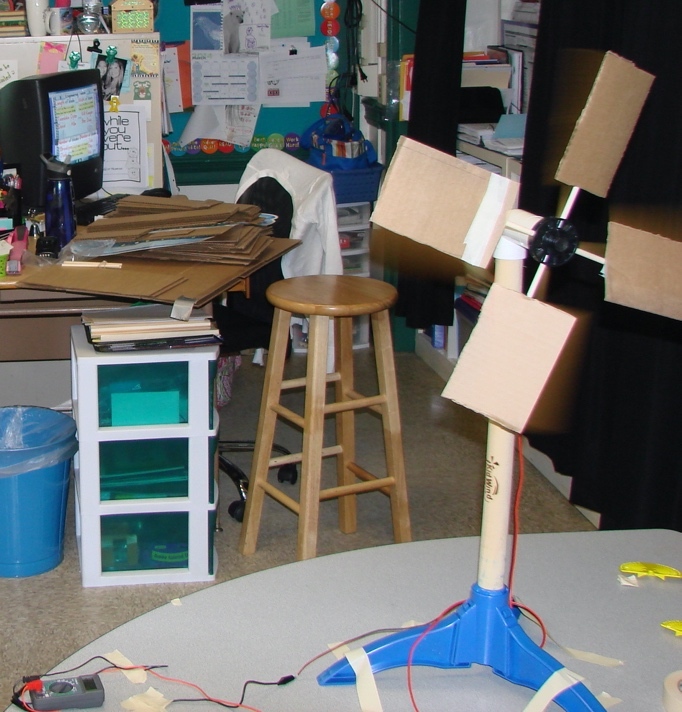
At the school, the PSTs are spread across one to three middle school classrooms, depending on PST course enrollment and middle school class size. Typically, there are three or four PSTs per classroom, and each PST teaches a small group of six to eight students. Over the years, the design challenge used in the field placement has varied. The design challenges relevant to the present study were the design of a model shoreline to support diamondback-terrapin habitat and reduce erosion into a bay (hereafter, shoreline challenge) and a wind turbine blade system design challenge (hereafter, wind turbine challenge); these challenges were middle school modifications to those reported in the journal, Science and Children (Lottero-Perdue et al., 2015, 2020). Most, but not all, sections of the course have included the field placement.
Participants
This study was approved by the first author’s Institutional Review Board (IRB). Nineteen participants enrolled in the engineering teaching methods course at the first author’s university consented to participate: six in 2021, seven in 2022, and six in 2023. This reflected an 86% participation rate across the three sections. All 19 participants facilitated a simulated discussion with one student avatar who was experiencing idea fixation during the brainstorming process and served. We dropped one of the 2021 participants from the sample because the PST was not prepared for the discussion and as a result, facilitated a very off-topic discussion. Thus, we included 18 participants in the sample to answer RQ1.
The 13 PSTs who were enrolled across the 2022 and 2023 sections of the course also taught an engineering challenge to middle school students in a field placement. Due to COVID, the 2021 section did not include a field placement. Most of these PSTs, 9 of 13, taught the wind turbine design challenge that was also the focus of the simulated discussion. Four of the PSTs taught the shoreline design challenge. After teaching the brainstorming part of the wind turbine or shoreline design process in their small group, each PST wrote a reflection about whether the simulated discussion was helpful with respect to facilitating brainstorming with real students. We drew from these 13 PST reflections to answer RQ2.
We did not gather demographic data from the participants. The most recent race/ethnicity student demographics at the university are: 40% White, 33% African American/Black, 11% Hispanic or Latine/x, 6% Asian, 5% two or more races, 1% international, and 4% other.
Simulation Scenario
Previously, we developed a two-page simulation scenario document (see Appendix) for PSTs to use to prepare to facilitate a discussion with a Mursion® middle school student avatar, Savannah, who was experiencing idea fixation (Lottero-Perdue & Mikeska, 2022). The document situates the PST as the teacher of Savannah and her classmates. Also included in the document was the following background information:
-
Prior to the engineering challenge, the class had scientifically investigated the relationship between six different wind turbine blade system variables (e.g., number of blades) and output voltage; a table of claims and evidence was included in the document.
-
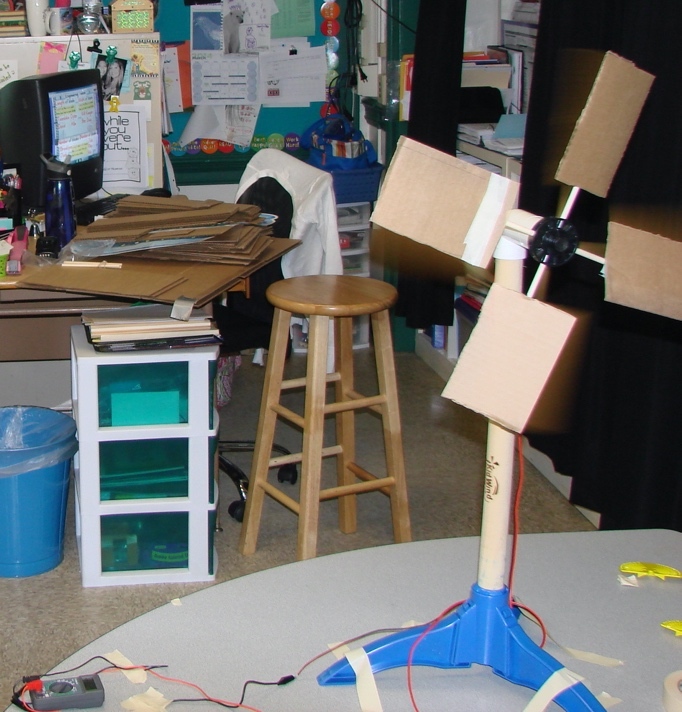
After introducing the challenge, the teacher (the PST) had asked each student in the class to brainstorm at least two ideas for a wind turbine blade system that would have the highest output voltage possible.
-
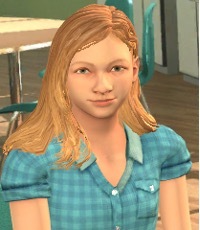
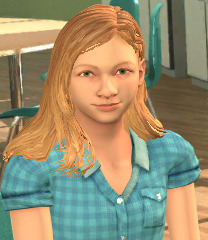
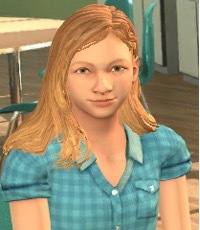
While monitoring students as they individually brainstormed, the teacher (the PST) noticed that Savannah (Figure 1) only sketched one idea on the brainstorming page of her notebook.
-
Savannah is a good student who is a bit of a perfectionist and has trouble with open-ended activities like design challenges.
-
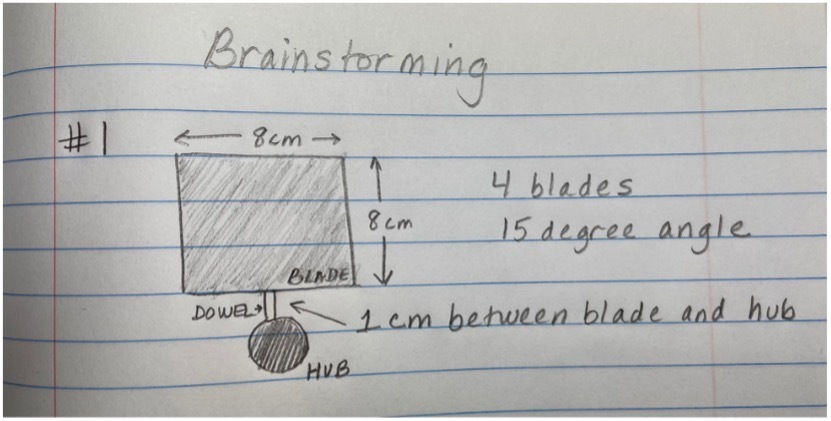
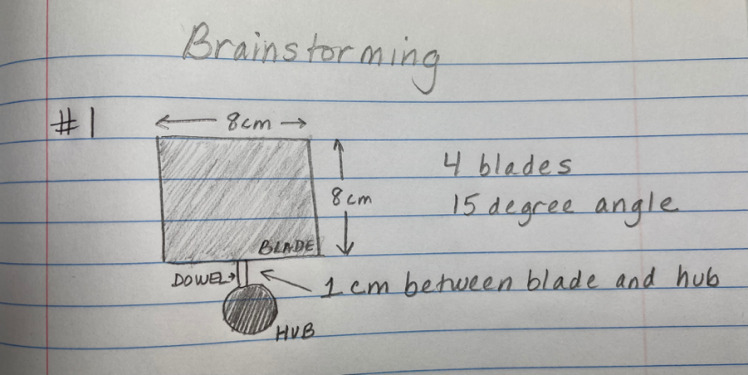
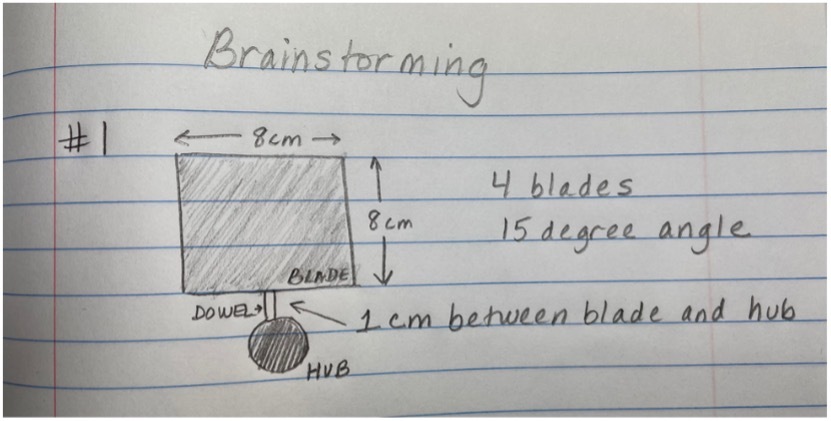
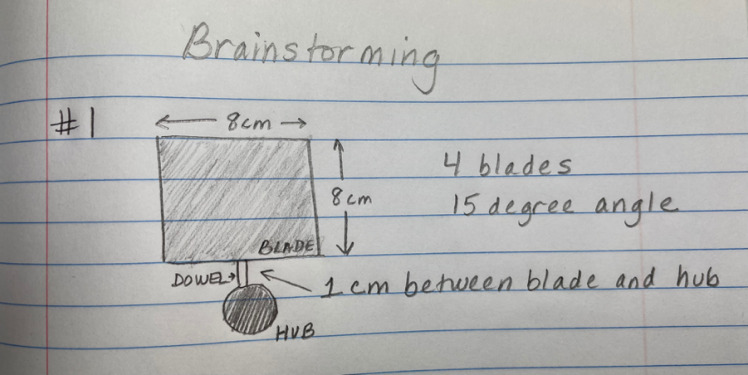
Savannah’s brainstorming page included just one idea; an image of this brainstorming page was provided in the document (Figure 2).
The document also informed the PSTs of the goals for the discussion as Savannah’s teacher. These were to (1) get Savannah’s attention when the PST first sees Savannah on Zoom, (2) elicit ideas from Savannah about her first brainstormed idea, and (3) support Savannah to add at least one new idea to her brainstorming page. The discussion was to be about 7 minutes in duration.
.png)
The Sim
The sim who played Savannah is the first author. To become a Mursion® sim, individuals must receive training from Mursion® to learn how to “be” the avatars for a particular classroom, which in this case was the middle school classroom. They must also pass a final performance assessment at the end of the training period to be a sim for that classroom. The middle school classroom was the first classroom the first author was trained to operate, thus taking the longest time to train (i.e., over 50 hours, including synchronous instruction with a Mursion trainer and asynchronous practice between synchronous sessions over a 2-week period). Mursion training entails gaining competence in:
-
Using the Mursion® software and computer hardware (i.e., gaming controller, headset, and webcam) with accuracy and speed;
-
Altering one’s voice and using audio morphing tools to vocalize each of the five avatars in a simulated classroom, each of whom has a unique voice;
-
Knowing or being able to quickly reference the background characteristics of each avatar as designed by Mursion® (e.g., Savannah is introverted, plays percussion in the band, and has an older brother and younger half-brother); and
-
Being able to not only respond to questions by a person playing the role of a teacher but also being able to have discussions among multiple avatars (for scenarios that involve more than one avatar), with the sim learning to quickly shift from one avatar to another.
Mursion® sims are improvisational actors. As such, they act within a particular set of constraints in response to the user (in our case, PSTs) who engage with the avatars (i.e., the sim). Their responses are not scripted, making the discussion between the user/PST and the avatars/sim feel more natural.
Many Mursion® sims have backgrounds in theater or improvisation. This is not the case for the first author whose background experience is as an educator and member of the engineering education community and who had the opportunity to learn to be a sim as part of an entirely separate project in which the first author served as a sim and supervised other sims. In both the present study and this other project, project-specific practice was required after sims completed Mursion® training. This practice prepared the sim for the content-specific nature of the discussions; in the present study, this discussion was about idea fixation. To support this effort, we created a document to help the sim to respond to questions consistently across participants during practice sessions and the discussions. For example, the document stated that:
-
When the PST enters the Zoom room, Savannah is writing in her engineering notebook.
-
Savannah’s initial ideas include that she is very satisfied with her first brainstormed idea, likes that her square shape is unique compared to those tested during science investigations, and used the science data to determine the dimensions of the square shape, the hub-to-blade distance, and the number of blades.
-
The PST might encourage Savannah to add a second idea, including by explaining the importance of multiple brainstormed ideas, connecting that to the broader notion of creativity, and asking Savannah how she might alter her first idea to come up with a second idea.
Note that for the present study, the first author did not reveal that she was the sim to the PSTs until the very end of the course. The PSTs were informed that the university uses Mursion® and employs people trained by Mursion® to serve as sims; these are accurate statements. At the end of the course, most PSTs were surprised that the sim was the instructor; some had an inkling but were unsure at the time of their discussion with Savannah.
Data Collection
Simulations
About two weeks prior to facilitating their individual discussions with Savannah, the first author worked with all PSTs in the course to identify times for them to facilitate their discussions with Savannah. Sessions were scheduled to occur within a one-week period. About one week prior to the first scheduled session, PSTs received the simulation scenario document, which they used to prepare for the session. Prior to receiving the document, the PSTs had completed brainstorming—as student designers themselves—for the wind turbine challenge.
When each PST entered the Zoom session at their scheduled time, they saw Savannah sitting at her desk writing. It was up to the PST to get her attention and begin the discussion. Discussions ranged from 5 to 9 minutes (M = 7 minutes) in duration. Zoom sessions were video recorded and we used the auto-transcription service from Zoom to create transcripts, which we then reviewed and corrected, as needed. Videos and transcripts were not used for research purposes until after grades were submitted at the end of each semester, as per the consent process approved by the IRB and given that the instructor was also one of the two researchers of record.
Reflections about Helpfulness of Simulations
After the PSTs taught the lesson within their field placements, which included the middle school students brainstorming design ideas for the wind turbine or shoreline challenges, they wrote and submitted a reflection on this experience. The reflection asked PSTs to respond to two questions: (1) How did your students engage in the brainstorming process? and (2) In what ways, if any, did your simulated discussion with Savannah about her brainstorming process help to prepare you to facilitate your (real) students’ brainstorming? Our focus in this study for RQ2 was on PST responses to the second question.
Data Analysis
Earlier, we identified the qualitative research methods that we have used in this study, namely conversational analysis (Horton, 2018; Sacks, 1985) and qualitative content analysis (Mayring, 2021; Schreier, 2014). We would not characterize this study as grounded theory research (Glaser & Strauss, 1967). This is in part because of our initial rooting of our work in the literature and our intentional design of a simulated environment for research (and practice) purposes. However, we have drawn from grounded theory methods of open, axial, and selective coding to identify, categorize, and tell the story of participants’ approaches and perspectives, respectively (Corbin & Strauss, 1990).
Simulation Transcript Analysis
We used conversational analysis of the 18 discussion transcripts (Horton, 2018; Sacks, 1985), coding each PST turn in the discussions. By turn, we mean the utterance (i.e., uninterrupted talk) by the PST that is preceded and/or followed by an utterance from Savannah. We began with a prior codebook which we had used to code discussions with Savannah for the 2021 participants only (Lottero-Perdue & Mikeska, 2022). Open and axial coding helped us to build a codebook, identifying ways that PSTs facilitated the discussion, including by having Savannah: share and defend Idea 1; consider how Idea 2 might be similar to or different from Idea 1; and consider the science investigations as a source to develop Idea 2. We also noticed in this initial coding process that PSTs conveyed ideas about why it is important to brainstorm multiple ideas, yet at times used prompts and questions that had the potential to hinder subsequent brainstorming (e.g., by evaluating Savannah’s ideas or giving specific suggestions to Savannah regarding Idea 2).
In our analysis for the present study, we analyzed the entire set of transcripts, i.e., from the 2021, 2022, and 2023 participants. We group-coded four transcripts, two from the original set and two others selected randomly. This coding resulted in some changes to our codebook. We then double-coded four additional transcripts, again chosen at random; see intercoder agreement percentages in the paragraphs that follow. We reconciled differences and again updated our codebook. Finally, the first author coded the remaining transcripts, highlighting areas of ambiguity to discuss with the second author; those areas were reconciled.
Consistent with our initial coding of the 2021 data alone, our coding of the entire data set resulted in two major categories in our final codebook, which were “supporting” and “hindering.” The first refers to those prompts that PSTs used that were likely to support Savannah in brainstorming (see Table 1). These were based on the role of brainstorming as a part of engineering design as described in the literature (Bartholomew & Ruesch, 2018; Clancy, 2024; Crismond & Adams, 2012; Kudrowitz & Dippo, 2013; Mentzer et al., 2015; Osborn, 1953), including that it is the student’s—in this case, Savannah’s—role, not the PST’s or teacher’s role, to generate ideas.
Hindering codes were applied to instances in which PST prompts may have hindered Savannah’s engagement in brainstorming (see Table 2). Collectively, these were instances in which the PST may have evaluated the quality of either Savannah’s first idea in her notebook or the quality of a proposed second idea, or offered up information about variables or design ideas for Savannah to consider for her second idea. These hindering codes are consistent with recommendations in the literature to refrain from engaging in critique during ideation and for the instructor to avoid providing ideas (Bartholomew & Ruesch, 2018; Osborn, 1953).
Relevance to brainstorming needed to be apparent and explicit within turns to be coded as supporting or hindering. General turns by the PST (e.g., “How are you doing?” or asking Savannah to continue if there was interrupted speech) were labeled as “no code.”
Intercoder agreement for supporting codes was as follows: Idea 1 (97%); Idea 2 (95%), Science (96%), Brainstorming (99%), Progress (100%), Multiple Ideas (96%), and Creative (99%). Intercoder agreement for hindering codes was as follows: Evaluate Idea 1 (91%); Evaluate Idea 2 (96%), Offer Variables (90%), and Offer Ideas (85%). The Interclass Correlation Coefficient (ICC) across all supporting and hindering codes for the two co-authors was 0.752 for average measures, assuming a confidence interval of 95%.
Reflection Analysis
The two co-authors collaboratively analyzed the 13 responses to the specific reflection prompt about the helpfulness of the simulation in preparing them to facilitate the brainstorming process with the real students in their field placements. First, we used directed (i.e., deductive) qualitative content analysis to determine if the response suggested that the simulation experience was helpful or not (Mayring, 2021; Schreier, 2014). Next, we used open, axial, and selective coding in the context of qualitative content analysis to describe, categorize, and determine the frequency across participants for PSTs’ reasons for why the simulation was helpful or was not helpful (Mayring, 2021; Schreier, 2014; Strauss & Corbin, 1990). All reason codes that we generated were emergent. Note that the first code in Table 3, Strategies, has five subcodes.
Findings
In this section, we first address findings related to RQ1 about supporting and hindering prompts during the simulation and then address findings related to RQ2 about helpfulness of the simulation. In the first section, we begin by summarizing the frequencies of supporting prompts across PSTs and codes, then do the same for hindering prompts. Then, we share the range of supporting and hindering prompts for each PST, providing examples of two PSTs who varied in their use of these prompts. In the second section, we share PSTs’ overall responses about the simulation being helpful or not in their reflections, followed by the reasons we coded in the PSTs’ responses.
RQ1: Supporting and Hindering Prompts
Supporting Prompts
Altogether, we applied 179 supporting codes across the 18 PSTs. Table 5 provides examples of each code from the data. Table 6 summarizes frequencies with respect to participants and codes. The two most frequently applied supportive codes were Idea 2 and Multiple Ideas, used by 94% and 100% of PSTs, respectively, and applied 59 and 47 times, respectively, across PSTs.
Hindering Prompts
Altogether, we applied 142 hindering codes. See Table 7 for examples of hindering prompts from the data and Table 8 for a summary of frequencies with respect to PSTs and codes. The two most frequently applied hindering codes were Evaluate Idea 1 and Offer Variables; each were applied to the transcripts of 89% of PSTs and were represented within 34% and 40% of all hindering codes, respectively. Almost exclusively, the type of evaluation that occurred with respect to Evaluate Idea 1 (or Evaluate Idea 2) was when the PST shared that Savannah’s idea was great or fantastic or some other type of praise. Although well intended, this may not be helpful with respect to focusing on brainstorming multiple ideas and letting Savannah determine the quality of her ideas without influence from the teacher.
Hindering and Supporting Prompts Across PSTs
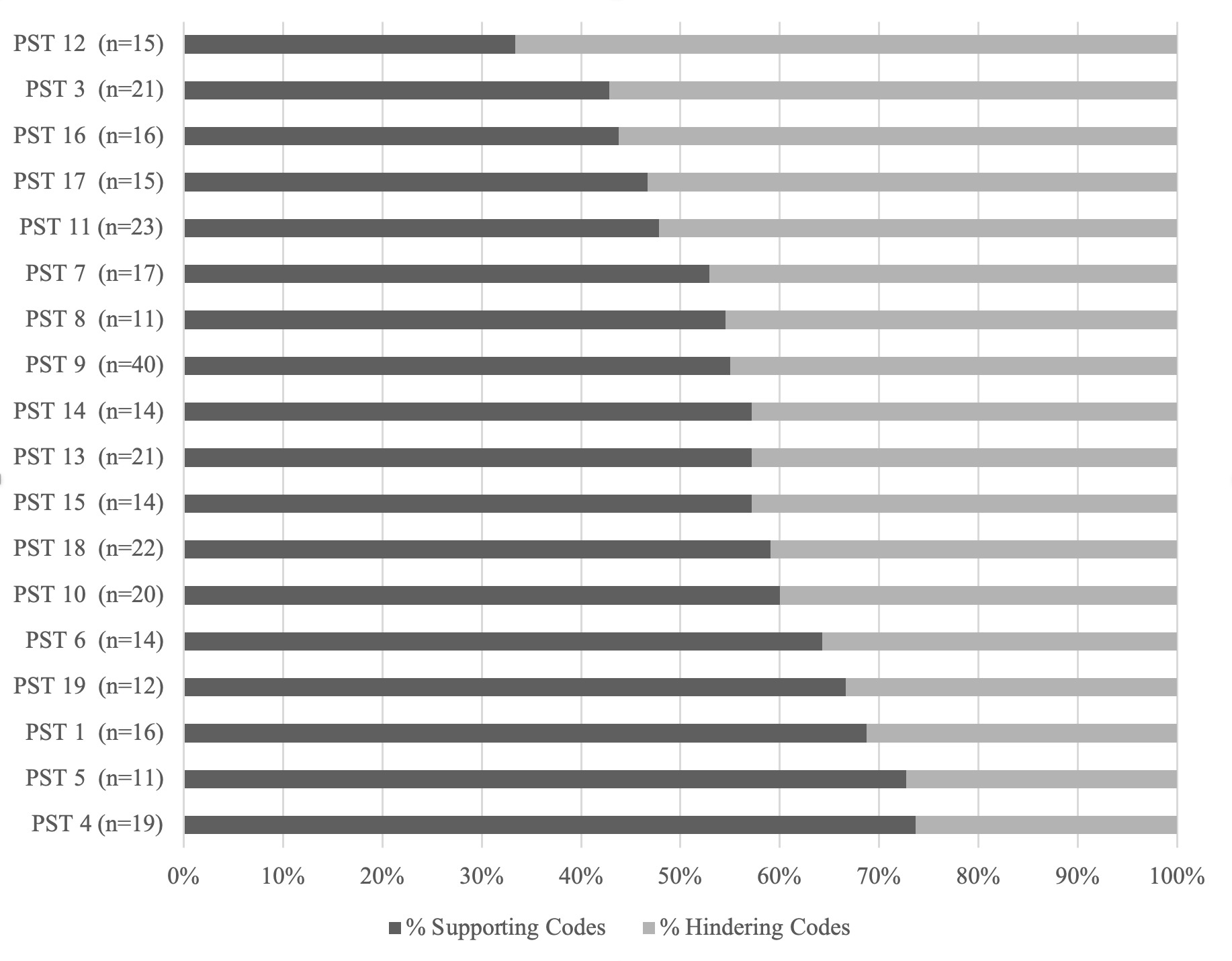
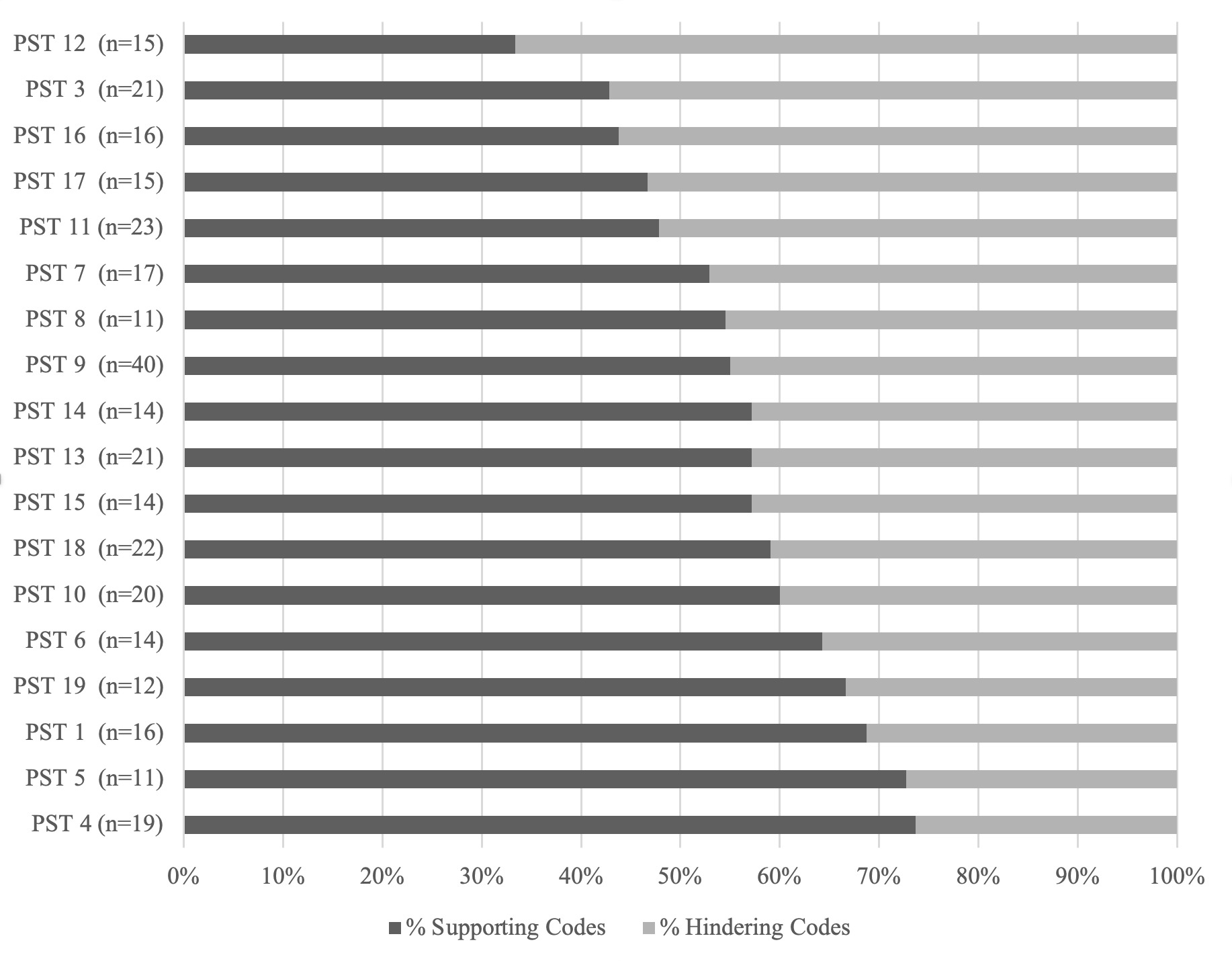
All PSTs used both supporting and hindering prompts, albeit to different extents. Figure 3 reflects the percentage of supporting and hindering prompts for each participant. PST 4 had the highest ratio of supporting to hindering codes, whereas PST 12 had the lowest. See Table 9 for details about their transcripts, as well as the minimum, maximums, and means across PSTs.
High Supporting PST 4
Overall, we coded 14 supporting and 5 hindering codes within PST 4’s transcript. The supporting codes included the following in order: (1) Idea 1, (2) Science, (3) Multiple Ideas, and (4) Idea 2. The hindering codes were Evaluate Idea 1 and Evaluate Idea 2. There are three distinct segments of PST 4’s discussion. The first occurred during the first three minutes of the discussion and focused on Savannah’s first brainstormed idea. This segment involved PST 4 asking Savannah about her first idea and referencing the scientific data in support of that idea (supporting codes, Idea 1 and Science) and praising Savannah’s first idea (hindering code, Evaluate Idea 1). See Table 10a for this exchange. We indicate supporting codes with “(S)” and hindering codes with “(H)”. In turns with multiple codes in this and other tables, we separate turn segments in the row and align them with corresponding codes.
In the next segment (Table 10b), PST 4 shifts into encouraging Savannah to consider having more than one idea. PST 4 begins with confirming that “it makes sense” to PST 4 why Savannah chose a 15-degree angle. PST 4 then praised Idea 1 again (hindering code, Evaluate Idea 1) and shared an argument for why more than one idea is preferrable (supporting code, Multiple Ideas). This segment was slightly over one minute in duration.
Note that we did not code PST 4’s statements about changing the shape or the angle as offering variables given that they were not delivered as a suggestion but rather more so as examples of what PST 4 and Savannah had just discussed (see Table 10a). For the final three minutes of the discussion, PST 4 focused on encouraging Savannah to consider Idea 2 (supporting code, Idea 2), leaving it up to Savannah about how to alter Idea 1 to generate Idea 2 or to “create a whole different design” (Table 10c).
High Hindering PST 12
We applied 15 codes to PST 12’s transcript; 5 of those were supporting and 10 were hindering. Supporting codes included Idea 1, Idea 2, Progress, and Multiple Ideas. Hindering codes included Evaluate Idea 1, Evaluate Idea 2, Offer Variables, and Offer Design Ideas. PST 12 began the discussion with a supporting prompt about Savannah’s first idea and then about Savannah’s second idea – what it might be and if she had a second idea (Table 11a).
More hindering prompts emerged in the next segment for PST 12, which started with Savannah’s hope that she only needed one idea on her brainstorming page (Table 11b). These prompts included offering design ideas, evaluating ideas, and the suggestion that both brainstormed ideas would be tested. She also used a supporting prompt in this segment with respect to the first idea.
After Segment 2, Savannah explained her decision making about choosing an 8 cm by 8 cm square shape for her blade. What followed were several instances in which PST 12’s contributions to the discussion may have hindered Savannah’s engagement in brainstorming. In Segment 3 (Table 11c), this took the form of evaluating the first idea and offering design variables and ideas.
The final part of PST 12’s discussion with Savannah, not shown here, included praise for the second idea that Savannah began to develop: “It looks awesome!” We coded this as hindering, Evaluate Idea 2.
RQ2: Simulation Helpfulness
Of the 13 participants who had a field placement after facilitating the simulation discussion, 11 PSTs (85%) reported that it was helpful in preparing them to facilitate real students’ brainstorming during their field placement; 2 PSTs (15%) reported that it was not helpful.
Reasoning about Helpfulness of the Simulation Discussion Experience
See Table 12 for a summary of codes we applied to the reasons why the 11 PSTs found the simulation with Savannah to be helpful in their teaching of real students. Note that the percentages in this table are out of 13 total PSTs and that we applied more than one code to some responses. We applied between zero and three codes to each of the 11 responses: 1 code for 7 responses; 2 codes for 2 responses; 3 codes for 2 responses.
Brainstorming Strategies. Most PSTs mentioned that one or more strategies they used to encourage Savannah’s brainstorming they then employed in their teaching of real middle school students. We coded these responses with the general subcode when they mentioned strategies without elaboration about what those strategies were. For example, PST 17 offered: “Since Savannah was a special case where a student was feeling fixed on one particular idea, I knew how to deal with this issue in case any of the 8 students in our group were also feeling this way.” PST 17 knew how to deal with the issue, but we are not sure how they did so; thus, we coded it as “general.” Three PSTs offered that their discussions with Savannah helped them to communicate the importance of having multiple ideas during the brainstorming process. PST 15 shared:
By addressing Savannah’s initial reluctance and ultimately helping her understand the importance of multiple ideas, I learned strategies to communicate the significance of creative brainstorming and encourage the students to explore multiple possibilities in their wind turbine design process.
We coded PST 14’s response with the creativity and engagement subcodes. PST 14 explained:
I found a lot of similarities between Savannah and my students as I had to convince both of them to become more engaged and really try. I know I used similar tactics between the two as I pushed creative ideals [sic] and the [idea] of discovering something new that could be revolutionary.
Finally, PST 13 mentioned using science data with her real middle school students like she did with Savannah as part of the brainstorming process:
For me, I recalled myself trying to refer back to the science investigation like how I did for Savannah. For example, the shape was the most distinct way to get another idea from the students, but for Savannah, it was the numbers in length or width. I think the simulation discussion helped me by having something I can refer back to and look at the student without forcing out something from them. It was a little leading, but I think the students got it when I mentioned certain parts of the science investigation.
Anticipating Responses. Three PSTs shared that the simulation experience was helpful because it enabled them to better anticipate the responses that middle school students might have. PST 11 shared that they were glad they did the simulations because:
Savannah asked … the same type of questions and … [had] the same responses to my questions. Having already met with a student (even if it was a simulation) made guiding real-life students through the brainstorming process a lot easier because I already knew, generally, what to expect.
PST 18 offered that the simulation was helpful in that it enabled them to “get the kinks out of facilitating the brainstorming process” and “begin to understand how sixth graders process information.” Similarly, PST 15 offered:
By engaging with Savannah’s perspective, I gained insights into common misconceptions or challenges that students might encounter during the brainstorming process. This experience allowed me to anticipate potential resistance or skepticism from students, helping me change my approach to address their concerns effectively.
Questions. Two PSTs suggested that the questions they posed in their discussions with Savannah prepared them for the questions they used in their discussion with real students. PST 18 shared that the simulated discussion with Savannah allowed them to “understand what questions and prompts are more effective when teaching.” PST 10 explained using an example:
In the simulated discussion I had to ask Savannah lots of questions about different variables regarding her design, which is similar to how I got my [real] students to start thinking about their design. I asked questions like “What kind of shape do you want for your design that can maximize your output voltage?” to get them thinking about the data that they had just collected.
Resist Telling. We applied the Resist Telling Code to just one PST’s response. PST 11 shared: “In my initial conversation with Savannah, a problem I had was leading, so I feel that I am getting better at catching myself before I say something wrong to the students.” PST 11 came to this conclusion about being too leading when they analyzed their questions and other prompts within the transcript of their discussion with Savannah; this transcript analysis (by the PSTs) is not included in the current study.
Reasoning about Unhelpfulness of the Simulation Discussion Experience
Two PSTs thought the simulation was not helpful. PST 7 said that it was not helpful “since my students had no idea of fixations” adding that her students “only had issues coming up with the designs and how to draw them.” We are uncertain about PST 7’s understanding of idea fixation and whether the issues students had with coming up with designs would count as such.
PST 8 also did not find the simulation to be helpful, but for a different reason. PST 8 had taught the shoreline challenge in her field placement experience. This was a different context than the simulation’s focus on the wind turbine challenge. PST 8 offered that due to this difference, “I wasn’t thinking about her [Savannah] in relation to my students.” PST 8 added, “Next time I should write down some of the questions I used to guide Savannah as related to the shoreline challenge instead of the wind turbine one.” This is a good idea for the instructor moving forward to help translate effective strategies or questions into the context(s) of brainstorming within the challenge that PSTs are conducting.
Discussion
RQ1: Prompts that Support or Hinder Brainstorming
These findings suggest that PSTs, with only minimal experience with brainstorming during an engineering design process themselves, are likely to come to engineering education learning experiences with ideas for productive prompts to support brainstorming. All 18 participants used supporting prompts. Collectively, these prompts encouraged Savannah to share her idea thus far, generate a second idea, draw from the relevant science, share how brainstorm is going for her, explain why she has just one idea thus far, assert the importance of having multiple ideas during brainstorming, and encourage Savannah’s creativity. These are consistent with ideas in the literature to support divergent thinking—especially to conceive of as many ideas as possible (Osborn, 1953), to provide a reason for why it is important to brainstorm multiple ideas (Crismond & Adams, 2012), and to be creative, generating unusual or wild ideas (Bartholomew & Ruesch, 2018).
That said, there is room for PSTs to learn to use more and a wider range of supporting prompts. Less than half of participants used supporting prompts that we coded as Brainstorming, Creative, or Science. Even High Supporting PST 4 did not employ prompts to encourage Savannah to be creative during the brainstorming process. These low frequency supporting prompts represent learning opportunities for PSTs and areas of focus for engineering teacher educators (Clancy, 2024; Mentzer et al., 2015). Also, encouragement to offer wild or playful ideas was largely absent from the transcripts (Bartholomew & Ruesch, 2018).
All PSTs used hindering prompts. Those prompts included Evaluate Idea 1, Evaluate Idea 2, Offer Variables, and Offer Design Ideas. The first two are consistent with the broader idea critique should be paused while ideas are being generated (Osborn, 1953). While this advice is generally towards those doing the brainstorming, in the classroom setting this includes the teacher as well; any evaluation, including praise, can stifle idea generation. Nearly all the turns coded as Evaluate Idea 1 or Evaluate Idea 2 were instances of praise, the intent of which likely was to be encouraging. This observation leads us to consider ways that we can suggest to PSTs that they can praise or encourage the brainstorming process rather than the quality of the ideas generated during that process. For example, PSTs can be encouraged to praise Savannah for getting started on the brainstorming process by having one idea, generating a second idea, or being willing to use her creativity to generate more ideas.
The latter two hindering prompt codes identified instances in which the PSTs offered (a) variables Savannah could or should modify to generate Idea 2 and (b) specific ideas Savannah could or should consider using. The difference between the two is the level of specificity, e.g., the idea to change the number of blades (Offer Variables) versus the idea to have three blades (Offer Design Ideas). The more hindering of these two is the latter, which is like offering examples during brainstorming—a practice to be avoided (Bartholomew & Ruesch, 2018), and one that is evident in the transcript excerpts from PST 12. The former, Offer Variables, may also hinder student sensemaking in that it may prevent Savannah from deciding on which of the variables she may be willing to change to generate a second idea. PST 4 provides an example of what it might look like to support Savannah’s brainstorming, rather than Offer Variables, by PST 4’s multiple queries that took the form of: “What is one thing that you might consider changing?”
Relatedly, after coding the data, we realized that the large percentage of hindering moves that we coded as Offer Variables may be due to suggestions in the simulation scenario (see Appendix). Those were suggestions, seen by all PSTs, about questions to encourage Savannah to consider other ideas and included three questions: (1) Are there any other numbers of blades that you might consider? (2) What other blade shapes could you try that might distribute the mass differently? and (3) Would you consider any other blade dimensions? These questions were provided with an intent to be helpful but were themselves potentially hindering as they did not suggest asking Savannah what variables she might be willing to consider changing in a broad way. Thus, one outcome of this study is the editing of the simulation scenario to remove these suggestions.
Finally, in this section we present a tentative two-part framework for supporting brainstorming and addressing idea fixation in engineering education. The framework is built from a combination of the literature we have drawn upon and our findings. The first part of the framework, shown in Table 13, lists the supportive strategies and prompts to encourage brainstorming (and address idea fixation), noting connections to the literature and our findings where relevant. The second part, shown in Table 14, is similarly formatted, albeit lists approaches or prompts that are likely to hinder the brainstorming process.
The rightmost column of Tables 13 and 14 identify ways in which the current study has contributed to the research literature, as well as where there may be an opportunity for us and others in the field to build on and expand this work. For example, future research could include PSTs (a) learning about tools to help students identify idea fixation (Hwang et al., 2020) and generate creative solutions (Leahy et al., 2020), then (b) encouraging a student like Savannah to use them. Another example is that an additional simulation could be used to explore how idea fixation and brainstorming might occur after individual team members brainstorm on their own (Diehl & Stroebe, 1987; Iyengar, 2023) and while the team negotiates and shares brainstormed ideas across individual team members.
RQ2: Helpfulness of Simulations to Prepare for Field Placements
Another study implication relates to the importance of helping PSTs connect and apply what they learn from simulated teaching experiences to their instructional practice with actual students, contributing to the literature on the relationship between PST engagement in simulations and their teaching practice (Lottero-Perdue et al., 2023; Straub et al., 2014, 2015). In this study, most of the 13 PSTs who had a field placement noted how they were able to use several of the brainstorming strategies from their simulated teaching sessions when they worked to support their middle school students’ brainstorming. Some PSTs also perceived that the simulation provided a way for them to anticipate their students’ responses and have questions ready to go for use in their conversations with their middle school students. These connections were especially the case for the PSTs who used the same engineering design challenge across both contexts. While this direct connection may not be possible in every case, these findings suggest that it is critical for teacher educators to help PSTs translate the productive teaching moves they are trying out and learning about in the simulated teaching sessions for use in classroom teaching. In cases where it is not possible to use the same exact design challenges, teacher educators may need to provide additional purposeful and contextualized scaffolding to help PSTs notice and apply such connections into their classroom instruction.
Connecting Study Outcomes with Broader Research on Digital Teaching Simulations
This study extends the current research on digital teaching simulations to an additional teaching practice in the context of engineering education: engaging in the process of supporting students’ brainstorming. One of the benefits of simulated classroom environments is the opportunity they afford to have all PSTs respond to the same teaching challenge with the same student(s) and the same instructional goal (Fischetti et al., 2022; Kaufman & Ireland, 2016). Yet, each discussion can play out differently based on how the PST decides to facilitate the conversation and which student ideas the PST decides to pursue, resulting in a concrete record (transcript) on which PSTs can reflect and discuss post-simulation. Our study leverages this tool to examine the nature of the teaching moves that PSTs used to engage in a content-specific teaching practice that is critical in engineering education but has been investigated infrequently in the current research literature. These findings build on existing research that has used simulated classrooms to examine other core teaching practices and the talk moves that PSTs and in-service teachers use to support student engagement and learning (Dittrich et al., 2025; C. Lee et al., 2021; T. Lee et al., 2023; Mikeska & Howell, 2020). The resulting framework can be used by teacher educators to help PSTs and in-service teachers consider how they can productively support students’ brainstorming in future engineering design challenges by focusing on the use of supporting rather than hindering teaching moves. They can also use this framework to analyze brainstorming conversations they facilitate with students, supporting their reflection and subsequent instructional decision-making.
Most importantly, this study investigates one of the potentially most impactful aspects of using simulated classrooms: whether such tools can be used to positively impact the nature of the teaching moves that PSTs use with students in real classrooms. To date, most of the research literature in this area has focused on PSTs’ and in-service teachers’ perceptions about engaging in digital teaching simulations; it is only recently that studies have taken up empirical questions about how teachers learn from using digital teaching simulations and how their learnings may translate into their instructional practice in the field (Bondie et al., 2021; Lottero-Perdue et al., 2023; Theelen et al., 2019). However, for such tools to achieve their maximum impact, it is important that they support teachers in becoming more prepared, confident, and skilled practitioners who can facilitate high-quality instruction in their classrooms. Study findings suggest that most PSTs reported a direct connection between their learning from their simulated discussion and their teaching practice within middle school classrooms, as the PSTs noted how they tended to use some of the same strategies for supporting the student avatar’s brainstorming with their real students. Future research in this area should investigate this translation process and the ways in which PSTs and in-service teachers apply what they learn from simulated classrooms to their classroom instruction and impact on student outcomes.
Study Limitations and Conclusion
Although this study provides evidence of the types of moves that PSTs might make as they interact with a student experiencing idea fixation and about the helpfulness of simulations to support instructional practice with real students, there are some limitations that are worthy of note. First, our sample size is limited, largely due to the small number of PSTs enrolled at the institution who wish to become middle school teachers who teach science. Also, due to COVID 19, only 13 of the 18 PST participants who engaged in the simulation in a substantive way were able to participate in a field placement. Of these, not all PSTs were able to teach real students in the same design challenge context (wind turbine) as the simulation. Further, we could not document each PST’s brainstorming discussion with their real students. Rather, we had to rely on PSTs’ self-reports of how the discussion went and how the simulation may have been helpful in preparing for the discussion.
Reflecting on the study, we also recognize that while all students should be given the opportunity to generate their own ideas—which we see as a form of encouraging their agency and sensemaking—there are some students who may need more direct suggestions. This is an area that needs additional attention. In the absence of research in this area, our suggestion is for teachers to start with broad suggestions (e.g., What variables could you change?). If those lead to significant struggle or challenge students’ needed accommodations, teachers could offer more specific suggestions like suggesting variables to consider altering (e.g., How about considering a new shape? What other shape could work well?).
Finally, we see the transcripts from this study as being useful teaching tools for future cohorts of PSTs in engineering education coursework (Lottero-Perdue et al., 2022). These transcripts can be used for PSTs to find examples of supporting and hindering prompts, consider alternative ways to encourage Savannah to generate a second idea, compare different approaches used to support brainstorming, and discuss brainstorming as an important part of engineering design.
More work is needed to explore how PSTs and in-service teachers support brainstorming and how students engage in it (Clancy, 2024). Simulated experiences like what we created is one avenue to address this call. For example, we wonder how PSTs might respond to student avatars who have trouble with brainstorming or are experiencing idea fixation and who have different dispositions or characteristics than Savannah. We are also curious about how PSTs or in-service teachers interact with a team of student avatars challenged by the process of sharing their brainstormed ideas and selecting an idea to pursue in the design process. Finally, we encourage more work in the field to examine the ways in which real students and teachers engage in brainstorming and experience and respond to idea fixation.
Acknowledgments
This article is an edited and expanded version of a conference proceedings paper presented at the 2025 American Society for Engineering Education (ASEE) Annual Conference and Exposition (Lottero-Perdue & Mikeska, 2025). We would like to thank the PSTs who participated in the study, the original reviewers in the ASEE Pre-College Engineering Education Division, and the ASEE Computers in Education editors and reviewers. (This work was not funded.)